



For Amazon sellers, product selection has always been a critical factor in determining whether a store can sustain long-term growth.
Many new sellers entering the Amazon market encounter the same question:
What products should I actually sell?
Some sellers directly check Amazon's Best Sellers list, hoping to find the highest-selling products; others observe what products their competitors are selling and then launch similar items.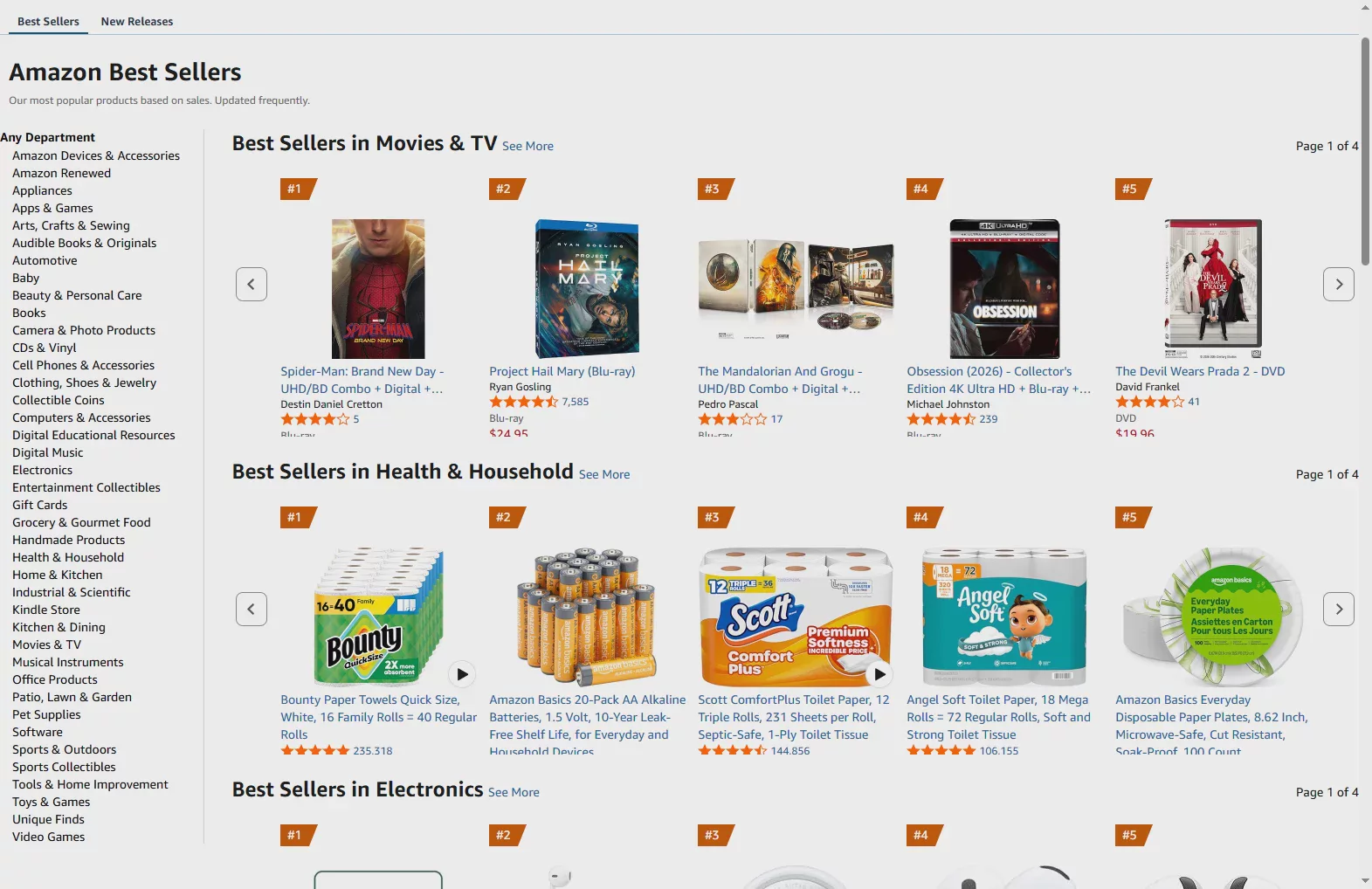
However, by 2026, this approach is becoming increasingly difficult to gain an advantage.
In the past, sellers could find market opportunities by discovering hot products, sourcing suppliers, and quickly launching listings. But as the number of Amazon sellers has increased, competition in popular categories has intensified. Established sellers already hold significant market share, so new sellers entering the market not only face higher advertising costs but also spend more time building reviews and search rankings.
Meanwhile, Amazon consumer demands are also changing. Shoppers no longer focus solely on price but care more about whether a product truly solves their needs and provides a better user experience.
Therefore, the Amazon product selection logic in 2026 has shifted from the past:
“Find a high-selling product and copy it.”
to:
“Use market trends, user needs, competitive data, and profit models to identify product opportunities with genuine growth potential.”
This article will introduce Amazon product selection methods for 2026, including current market changes, product directions worth focusing on, commonly used selection tools, and how to step-by-step determine whether a product is worth entering.
I. What Changes Have Occurred in the 2026 Amazon Product Selection Environment?
Before searching for products, sellers first need to understand what changes are occurring in the Amazon market environment.
Because product selection strategies are not fixed; the competitive landscape and cost structure at different stages directly impact whether a product is worth investing in.
1. FBA Cost Changes Make Profit Calculation the First Step in Product Selection
In the past, many sellers judged whether a product was worth selling primarily by looking at selling price and purchase cost.
But by 2026, relying on just these two data points is no longer sufficient to accurately determine profit.
Amazon sellers need to simultaneously consider product purchase costs, international logistics fees, platform commissions, FBA fulfillment fees, storage costs, and advertising expenses.
Taking FBA fulfillment as an example, Amazon has continuously adjusted fulfillment fees and storage-related fees in recent years. The operating costs for products of different sizes, weights, and inventory cycles will all vary. Therefore, in 2026, sellers need to recalculate product profits using the latest fee schedules rather than continuing to reference past cost models.
For instance, a product selling for $30 may yield very low profit after deducting procurement, logistics, FBA fees, and advertising costs. Even if sales volume increases, it may still struggle to generate long-term returns.
Therefore, products truly worth entering are not just those with high sales volume, but those that remain profitable under a complete cost model.
2. Increased Advertising Competition Forces New Sellers to Avoid Highly Competitive Markets
Amazon traffic acquisition increasingly relies on advertising.
In the past, a new product listing could still gain exposure through organic rankings after launch.
Now, however, popular keywords are usually dominated long-term by established sellers.
For example, ordinary electronic accessories, basic home goods, and mass-market apparel products have stable demand, but they attract many competitors. New sellers entering these spaces often need to invest substantial advertising budgets.
Therefore, product selection strategies in 2026 lean more toward finding niche markets with stable search demand, lower competition levels, clear user needs, and room for optimization.
Rather than entering a highly competitive broad market, finding a smaller market with clear demand often makes it easier to build an advantage.
3. Consumers Care More About Product Experience Than Pure Price
As Amazon users become increasingly sophisticated, shoppers no longer compare only price when making purchases.
They care more about whether the product is convenient to use, solves practical problems, and fits their usage scenarios.
Many products are not without a market; rather, existing products have not fully met user needs.
For example, a product may sell well, but if reviews reveal widespread feedback about complex installation, mediocre material quality, or unreasonable functional design, these issues can become opportunities for new sellers.
By solving user pain points and optimizing existing products, it is often easier to gain market share than simply copying competing products.
II. Product Directions Worth Attention in 2026
No single category can guarantee success.
Product directions truly worth researching usually possess stable demand, a clear target audience, controllable competition levels, and room for product optimization.
1. Home & Living: Shift from Generic Products to Scenario-Based Needs
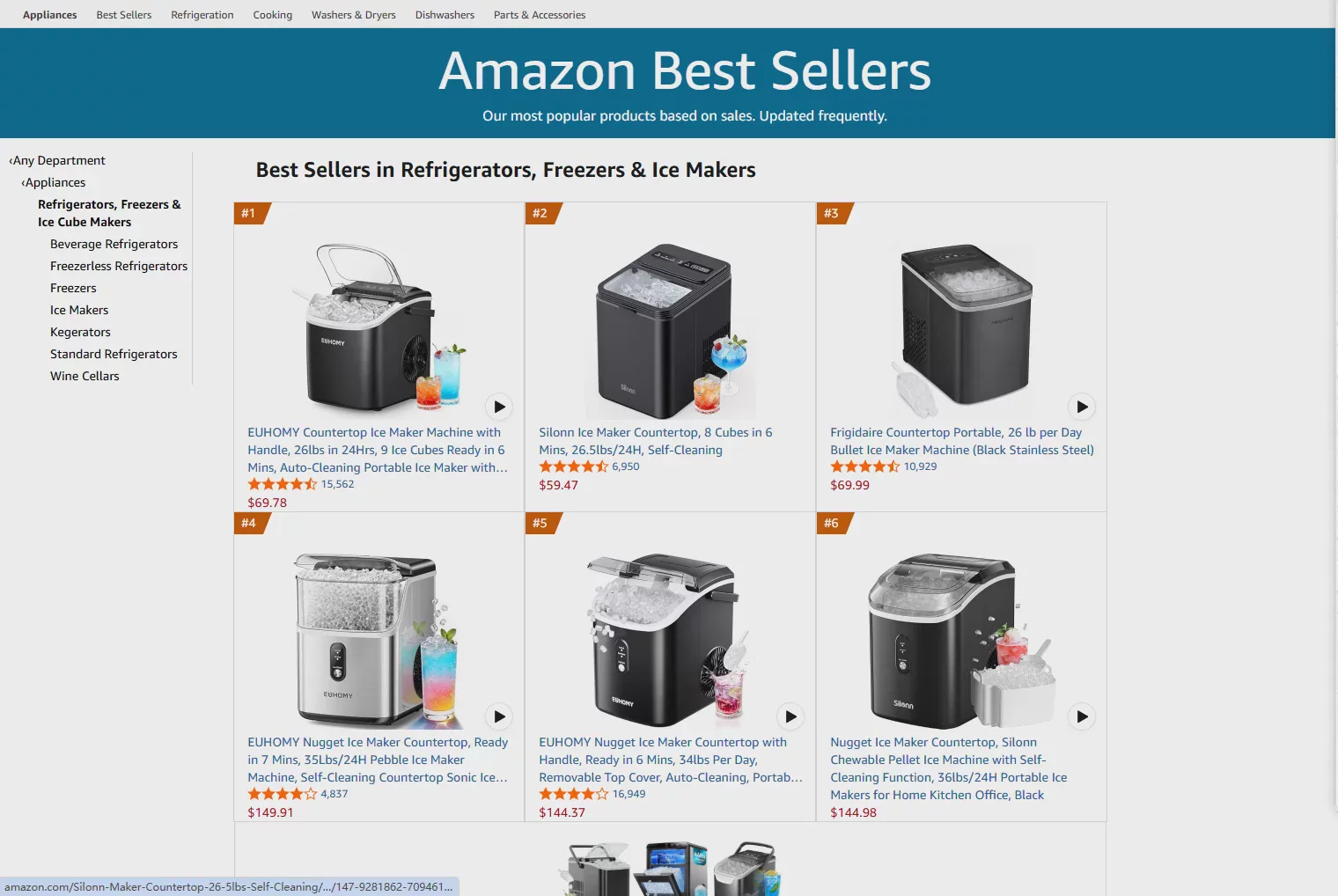
Home goods have always been an important category on Amazon.
However, for new sellers, directly entering the generic home goods market is highly competitive.
For example, ordinary storage boxes, basic kitchen tools, and standard decorative items have stable demand but already feature many established sellers.
A more worthwhile area to research is product opportunities within specific living scenarios.
For instance, a no-drill bathroom storage rack designed for renters is a typical niche direction.
Compared to generic storage products, this type of product solves the problem that renters cannot install items by drilling holes. Further analysis of Amazon reviews may reveal that some competing products have issues with insufficient load-bearing capacity or complicated installation. These user feedback points can become directions for product optimization.
For sellers, the real opportunity is not to sell a “storage rack,” but to solve the specific needs of a certain user group.
2. Pet Supplies: Focus on Functional and Scenario-Based Products
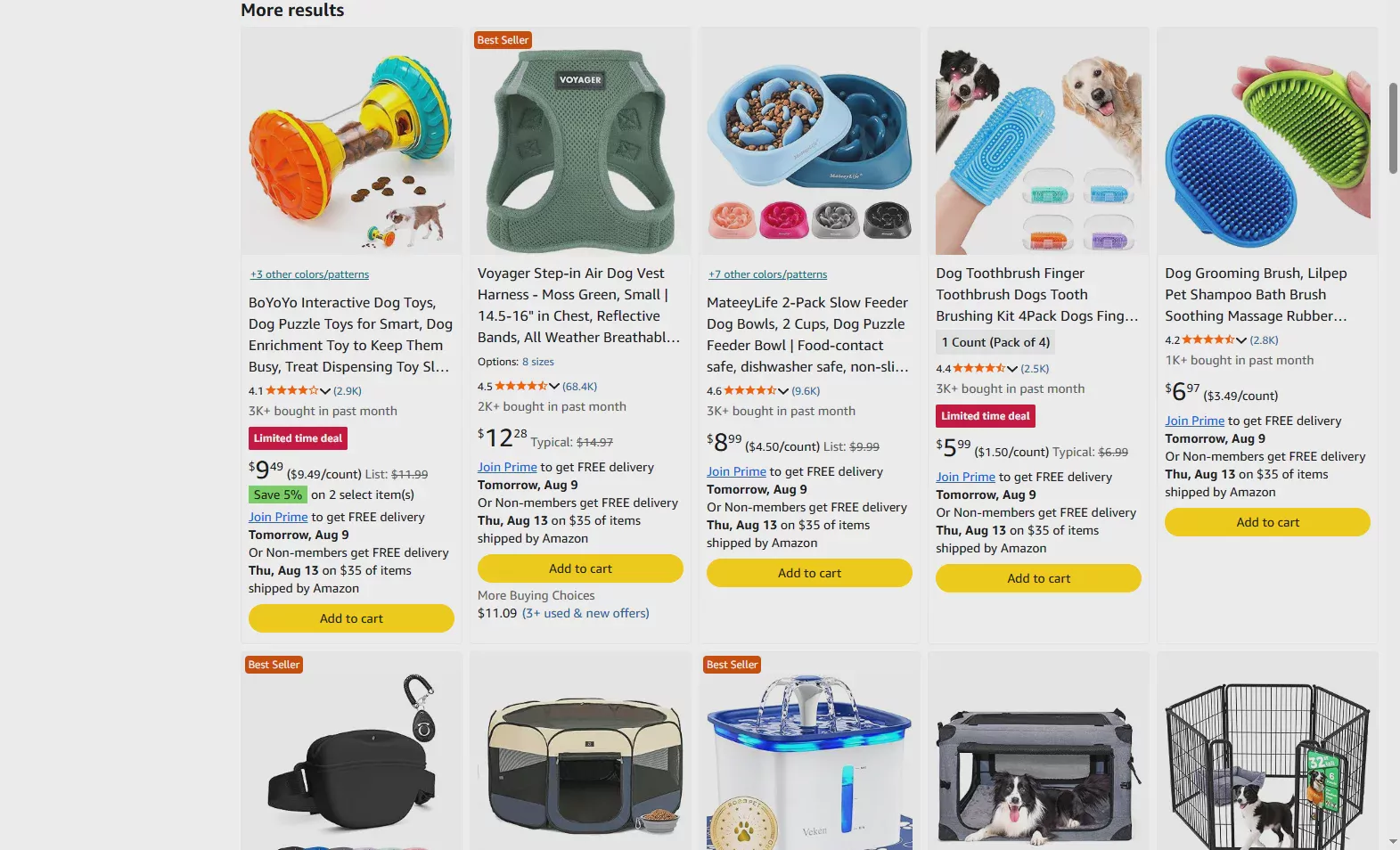
Pet supplies have always been a highly followed market on Amazon.
But competition for generic pet products is already quite intense.
For example, ordinary pet toys, basic pet bowls, and fundamental pet supplies already have numerous competitors.
In comparison, functional pet products are more likely to achieve differentiation.
For instance, portable pet water dispensers designed for travel scenarios solve the inconvenience pet owners face when carrying water for their pets during trips. Products designed for pet health management can also better meet consumers' demands for pet care.
When researching the pet category, sellers should focus on consumer reviews to identify problems users repeatedly raise.
These problems are often new product opportunities.
3. Outdoor & Sports Products: Identify Niche User Needs
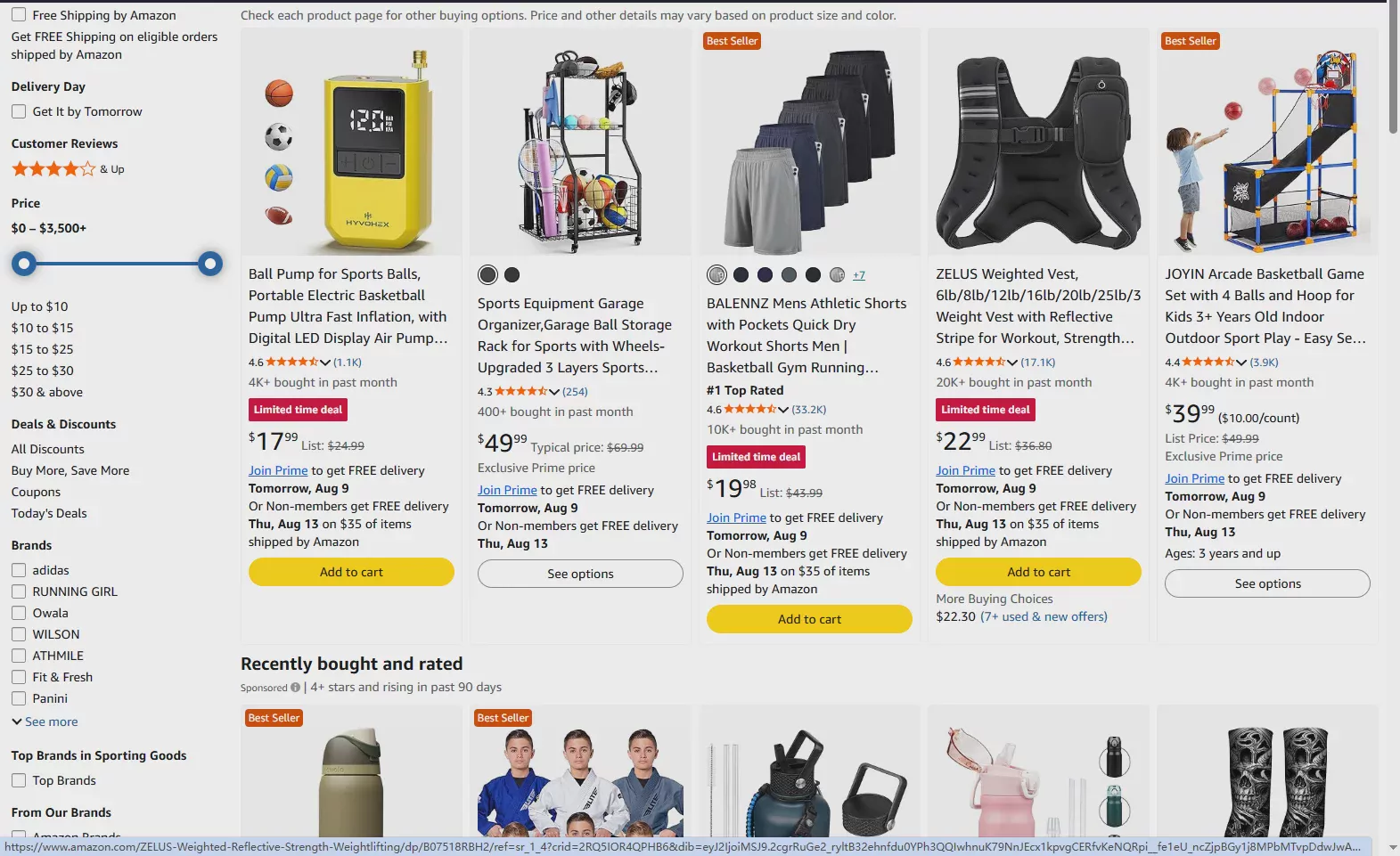
As consumers increasingly focus on healthy lifestyles, outdoor and sports-related products still have market space.
However, new sellers are not well-suited to directly enter highly competitive mass markets.
For example, generic camping gear and basic fitness equipment already involve numerous brand competitors.
A better direction is to find specific usage scenarios, such as lightweight travel gear, compact home camping products, or accessories for specific sports. Although these products may not have as large a market size as mass-market items, user needs are more clear and it is easier to build competitive advantages through product differentiation.
4. Personalized Niche Products: Identify Small-Market Opportunities
In the 2026 Amazon market, a clear trend is that consumers are increasingly willing to purchase products tailored to their specific needs.
For example, while a generic backpack targets all consumers, photography backpacks, business backpacks, and outdoor backpacks each cater to different user groups.
Although the market size of these niches may be smaller, the competitive environment is also more clear.
For new sellers, rather than entering a massive but fiercely competitive market, it may be better to find a small market with clear demand.
III. How to Step-by-Step Discover Amazon Product Opportunities?
Product selection is not based on intuition but should be validated through data.
Step One: Use the Amazon Platform to Discover Market Demand
Amazon itself is the largest consumer demand database.
Sellers can look for product directions through Best Sellers, search suggestions, and product reviews. Best Sellers help sellers understand currently popular products, but you should not focus only on rankings. More importantly, analyze product pricing, review counts, ratings, and brand concentration.
For example, if the products on the first page for a certain keyword all have thousands of reviews and are mainly dominated by large brands, entering that market is usually difficult. If a product sells well but the products on the first page have low review counts, or if user feedback contains obvious problems, there may be new opportunities.
Amazon search suggestions are also highly valuable. Keywords users actively search for usually represent genuine purchase intent. Analyzing long-tail keywords can reveal more specific user needs.
Step Two: Use Selection Tools to Validate Market Opportunities
After discovering a product direction, you need to further validate market data.
Different stages require different tools.
In the early stage when judging market trends, you can use Google Trends to observe keyword search changes and determine whether consumer interest is growing sustainably.
Once the product direction is set, you can use Helium 10 or Jungle Scout to analyze keyword search volume, competitor performance, market competition levels, and estimated sales figures.
For example, a product may appear to sell well, but if its primary keywords face extremely high competition, the entry cost for new sellers could be very high.
Through data analysis, you can pre-screen products with greater risks.
Step Three: Analyze Competitors to Identify Product Optimization Opportunities
Competitive analysis is not about copying competitors, but about finding market shortcomings.
Sellers need to focus on competitor review counts, ratings, price ranges, and the content of negative reviews.
For example, if a product has a rating of 4.1 stars and good sales volume, but many users report difficulty with installation, optimizing the installation process could become a new competitive advantage.
User reviews are often closer to real market demands than the seller’s own judgments.
Step Four: Calculate Profit to Confirm Whether the Product Is Worth Entering
After completing market and competitive analysis, you need to return to the most core question:
Will this product make money?
The profit calculation formula is usually:
Selling price - Product cost - Logistics fees - Amazon fees - Advertising costs = Actual profit.
If a product requires heavy advertising investment to generate orders but leaves insufficient profit margin, then even if market demand exists, it may not be suitable to enter.
Therefore, before officially purchasing inventory, sellers need to confirm unit profit, advertising spend ratios, inventory costs, and capital recovery cycles.
IV. Recommended 2026 Amazon Product Selection Tools: Which Tools to Use at Different Stages?
The value of selection tools is not to directly tell sellers which product will definitely make money, but to help lower the cost of judgment.
Market Trend Analysis Stage: Google Trends

Google Trends is suitable for judging changes in consumer interest levels.
Sellers can use it to analyze whether a product keyword is growing sustainably, whether there is seasonal demand, and the differences in attention across different markets.
It is more suited to serving as the first step in product research.
Product Research Stage: Helium 10 and Jungle Scout


After determining the product direction, you can use professional Amazon selection tools for further analysis.
Helium 10 can help sellers research keywords, competitor performance, and market data. Jungle Scout is better suited for product discovery and market analysis.
The goal at this stage is not to find a “hit product,” but to judge whether the market offers opportunities, whether competition is enterable, and whether the product has profit potential.
Product Validation Stage: Keepa

After identifying a product, you can use Keepa to view historical price and ranking changes.
Through historical data, you can determine whether the product has been selling steadily over the long term, whether prices fluctuate frequently, and whether sales growth is merely a short-term phenomenon.
The complete process is usually:
Google Trends identifies trends → Helium 10/Jungle Scout analyzes the market → Keepa validates historical performance.”
V. Common Reasons for Amazon Product Selection Failures
Many sellers fail not because they cannot find products, but because they overlook key factors during the judgment process.
The most common problem is focusing only on sales volume without analyzing competition. A product may have very high sales, but that does not mean it is easy for new sellers to enter. If the first page is already dominated by many established brands, subsequent operating costs will increase significantly.
Another common issue is ignoring profit. Many products may appear to have good selling prices, but after deducting logistics, FBA fees, and advertising costs, the profit margin may be very slim.
Additionally, simply copying competing products is a high-risk approach. Products with real opportunities usually create new value by optimizing functionality, design, or user experience based on existing market demand.
VI. How to Manage Account Environments When Testing Product Selection Across Multiple Amazon Sites?
After sellers use market analysis to filter out multiple potential products, the next step usually involves actual testing.
For example, testing home products on the US site, pet supplies on the European site, and outdoor gear on the Canadian site. Different sites may correspond to different user needs and competitive environments.
In this situation, each site’s account needs to maintain an independent operational environment.
If multiple accounts long-term use the same browsing environment, the data, cookies, and browser parameters of different accounts may become mixed, increasing team management difficulty.
Therefore, multi-site operations teams usually need to establish independent environments for different accounts.
VII. How Does P1 Help Amazon Sellers Conduct Cross-Site Product Selection Testing?
When sellers need to test multiple product directions simultaneously, account environment management becomes an important factor affecting efficiency.
For example, when testing home products on the US site and pet supplies on the European site, each site’s account needs to correspond to the target market’s proxy IP and independent browser environment to avoid cross-contamination of operational data across different sites.
P1 fingerprint browser can help sellers create independent browsing environments for different Amazon accounts and configure corresponding regional proxy IPs, browser fingerprints, and account data based on different market demands.
In this way, teams can more easily conduct cross-site, cross-category product selection testing, improving the management efficiency of multiple Amazon accounts.
Summary: In 2026, the core of Amazon product selection is finding genuine market opportunities
The 2026 Amazon market is no longer suited for simply copying hot products.
Successful product selection requires combining market trend analysis, consumer demand research, competitor data analysis, and profit model calculations, using data validation to determine whether a product truly has entry value.
In actual practice, sellers usually first discover market opportunities through trend analysis, then use selection tools to validate demand, identify optimization opportunities through competitor research, and finally determine whether to enter based on profit models.
Meanwhile, for teams that need to test multiple product directions and operate across multiple Amazon sites, stable account environment management is equally important.
By driving product selection with data and combining it with reasonable operational tools, sellers can build long-term advantages in the increasingly competitive Amazon market.