


For many professionals working with overseas markets, proxy IPs are tools they encounter almost every day.
Whether operating overseas platforms such as TikTok, Facebook, and Amazon, running advertising campaigns, engaging in affiliate marketing, collecting data, or even using AI Agent to access services in different regions, they encounter various types of IPs: residential IPs, native IPs, broadcast IPs, datacenter IPs, static IPs, and dynamic IPs…
Many proxy providers also use these concepts as selling points, such as "US native residential IPs," "dedicated static IPs," and "broadcast residential IPs." However, for beginners who are new to proxies, these terms are not only confusing but also often described differently by different providers for "the same IP," leaving them completely unsure how to choose.
This article,P1 Fingerprint Browserexamines the most common IP identities in the proxy industry today, explaining what each one represents, its characteristics, and which businesses it is suitable for.
I. Residential IPs: The Network Identity Closest to Real Users
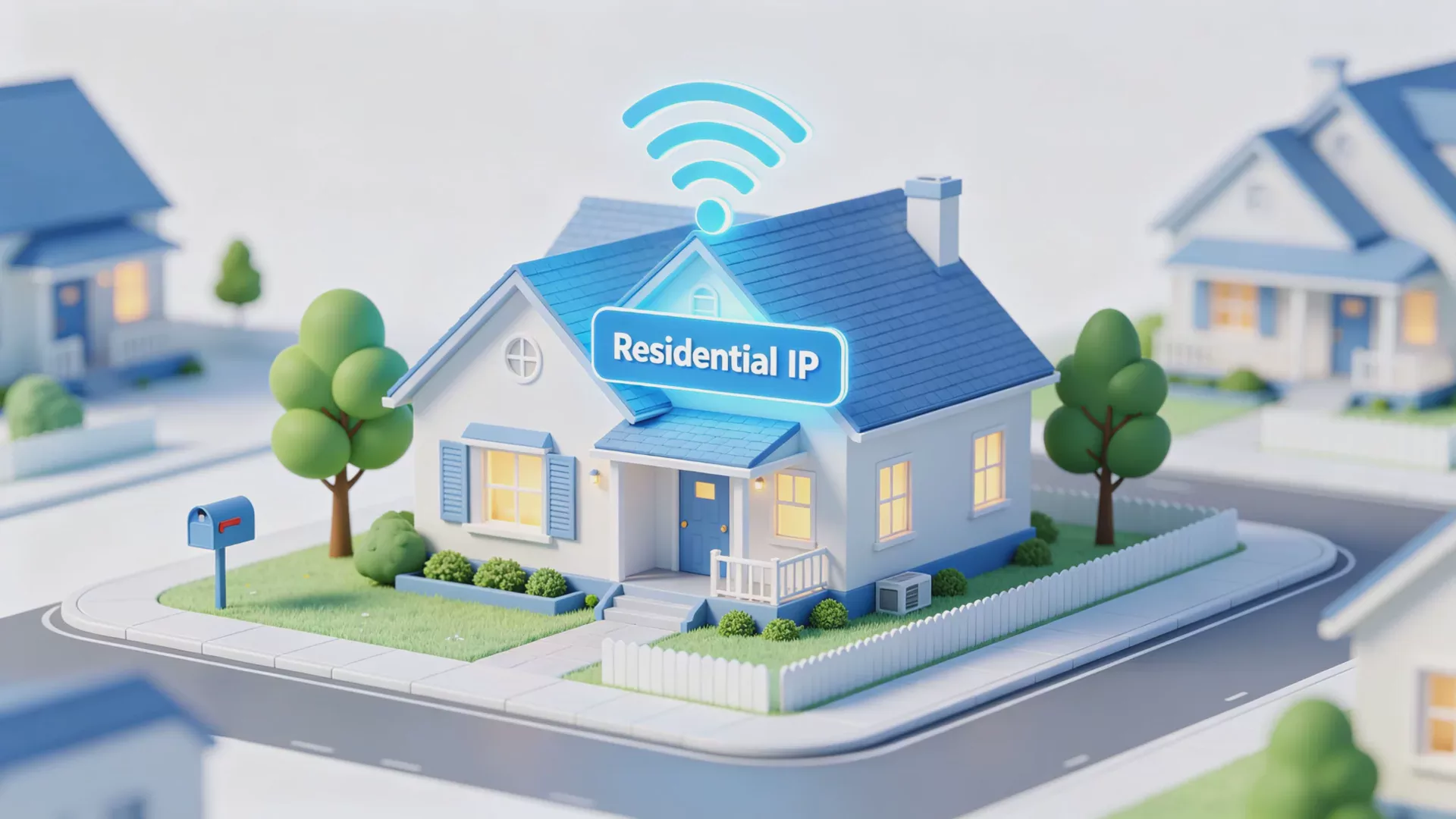
If we were to name one of the most popular types of IP in the proxy industry, residential IPs would certainly rank among the top choices.
As the name suggests, a residential IP is an IP address assigned by a home broadband provider for use by ordinary household users, such as Comcast and AT&T in the United States, SoftBank in Japan, or BT in the United Kingdom. These IPs originate from real residential networks, so from a website's perspective, they are not much different from the IPs used by ordinary users for their daily internet access.
For this reason, residential IPs have long been considered one of the most trustworthy proxy resources.
For platforms such as Facebook, TikTok, Instagram, and Amazon, residential IPs are more consistent with the network characteristics of real users. As a result, they offer good stability in scenarios such as account registration, long-term login, advertising, and cross-border e-commerce operations.
Of course, their prices are usually higher as well. On the one hand, residential IP resources are relatively limited; on the other hand, because market demand has remained high, the cost of high-quality residential IPs is naturally higher than that of ordinary data center IPs.
However, residential IPs are not a universal solution. For scenarios such as web testing, API debugging, and routine data collection, using residential IPs is somewhat excessive. Data center IPs cost less and are more cost-effective instead.
Simply put, if your goal is to operate overseas accounts over the long term and reduce the risk of platform security controls, residential IPs will often be the preferred choice; if you simply need a proxy that can access a target website, you may not necessarily need to choose a residential IP.
Native IP: The Most Misunderstood Concept in the Proxy Industry
Compared with residential IPs, "native IP" may be the term in the proxy industry that is most likely to cause confusion.
When purchasing proxies, many people see merchants promoting products such as "US native IPs," "Japan native IPs," and "UK native residential IPs," so it is easy to assume that native IPs are an independent type of IP.
In fact, in the proxy industry, a native IP is more of a term describing a network environment than a fixed IP category.
Generally speaking, what people refer to as a native IP usually means that the IP address is assigned by a local carrier in the target country or region and has a local network exit, ASN information, and geographic attributes, making it appear more consistent with the network environment of a genuine local user.
For example, consider two US IPs: one from a residential network operated by a local US carrier and the other from a data center IP hosted on an overseas cloud server. Although both appear to be located in the US, many platforms do not view them as having exactly the same level of credibility. As a result, many proxy providers emphasize that their products are "native IPs" to highlight that their network environments are more authentic.
However, proxy providers do not have a completely uniform definition of "native IP." Some native IPs are actually residential IPs, while others are ISP IPs. Some providers instead emphasize that the IP registration location, ASN, and actual network exit are consistent. Therefore, when purchasing a proxy, it is more important to understand its actual source, carrier information, and suitability for your business than to focus solely on whether it is "native."
For cross-border e-commerce, overseas social media operations, and ad placement, native IPs are often a worthwhile option to prioritize. However, the prerequisite is still to choose a reliable proxy provider rather than making a judgment based solely on the words "native IP."
III. Broadcast IPs: Lower Prices, but Not Suitable for Every Business
In addition to residential IPs and native IPs, many proxy providers also offer a product known as a "broadcast IP."
When they first hear this name, many people associate it with the broadcast address in computer networks. In reality, however, broadcast IP in the proxy industry does not mean that; it is simply a colloquial term that has been used in the industry for a long time.
Simply put, a broadcast IP is more akin to a shared IP pool usage model. Proxy providers maintain a large number of residential IP resources and continuously assign IPs to different users through a rotation mechanism. As a result, users may receive a new exit IP each time they connect to the proxy.
Broadcast IPs are generally less expensive, mainly because their IP pools are large and support frequent rotation. They are therefore well suited to businesses that require frequent IP changes, such as web scraping, SEO data monitoring, price research, and AI search testing.
However, their drawbacks are also quite apparent. Because the IP changes frequently, using them on platforms such as Facebook and TikTok that require users to remain logged in over long periods can easily result in frequent changes to the login environment. Therefore, they are not suitable as the primary proxy solution for long-term account maintenance or account operations.
It can be understood that broadcast IPs place greater emphasis on "quantity" and "rotation efficiency," whereas residential IPs focus more on "stability" and "credibility." Neither has an absolute advantage; they are simply suited to completely different business scenarios.
Datacenter IPs: The Fastest and Most Cost-Effective Type of Proxy
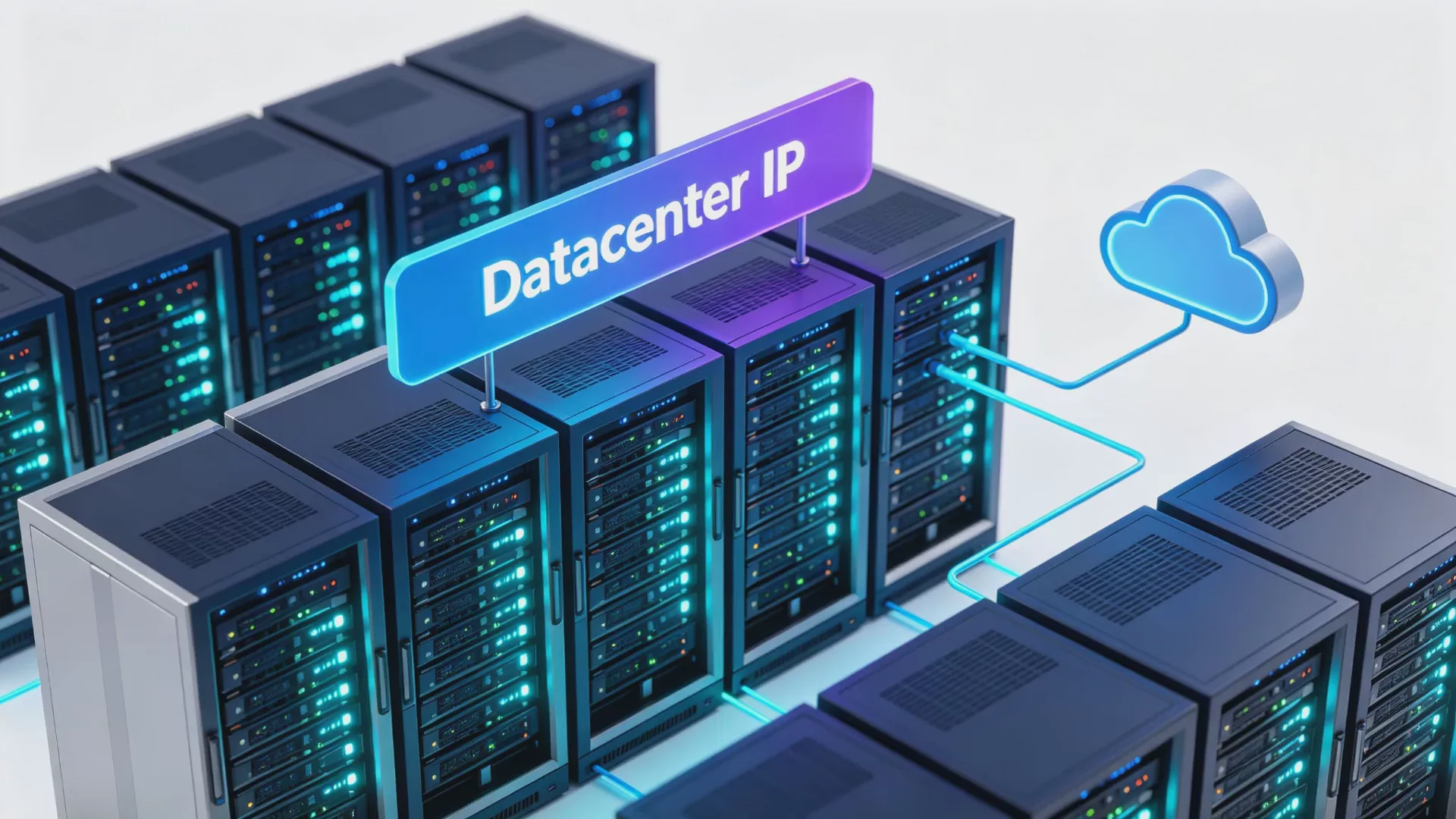
If residential IPs represent real user networks, then datacenter IPs represent an entirely different type of proxy resource.
As the name suggests, datacenter IPs (Datacenter IP) come from cloud servers or data centers rather than ordinary home broadband connections. The server IPs provided by cloud platforms such as AWS, Google Cloud, and Microsoft Azure all belong to this category.
Compared with residential IPs, the biggest advantages of datacenter IPs are their fast speeds, high stability, low cost, and ability to be acquired in bulk. As a result, they are widely used in automated testing, web crawling, API calls, SEO data scraping, and other scenarios.
However, precisely because these IPs come from data centers, target websites can usually identify them more easily as server networks. Some platforms with stringent account risk-control requirements may conduct additional checks on these types of IPs. Therefore, when used to operate social media accounts over the long term, they often perform less effectively than residential IPs or native IPs.
For developers, however, datacenter IPs remain a cost-effective choice. Especially in scenarios requiring high concurrency, large-scale data collection, or automated scripts, access speed, cost, and stability are often higher priorities than simulating a real user network environment as account operators must.
Static IPs and Dynamic IPs: The Biggest Difference Is Whether They Change
Many people assume that static IPs and dynamic IPs are the same type of classification as residential IPs and native IPs, but that is not the case.
Residential IPs and datacenter IPs primarily describe the source of an IP, while static IPs and dynamic IPs describe how the IP is assigned.
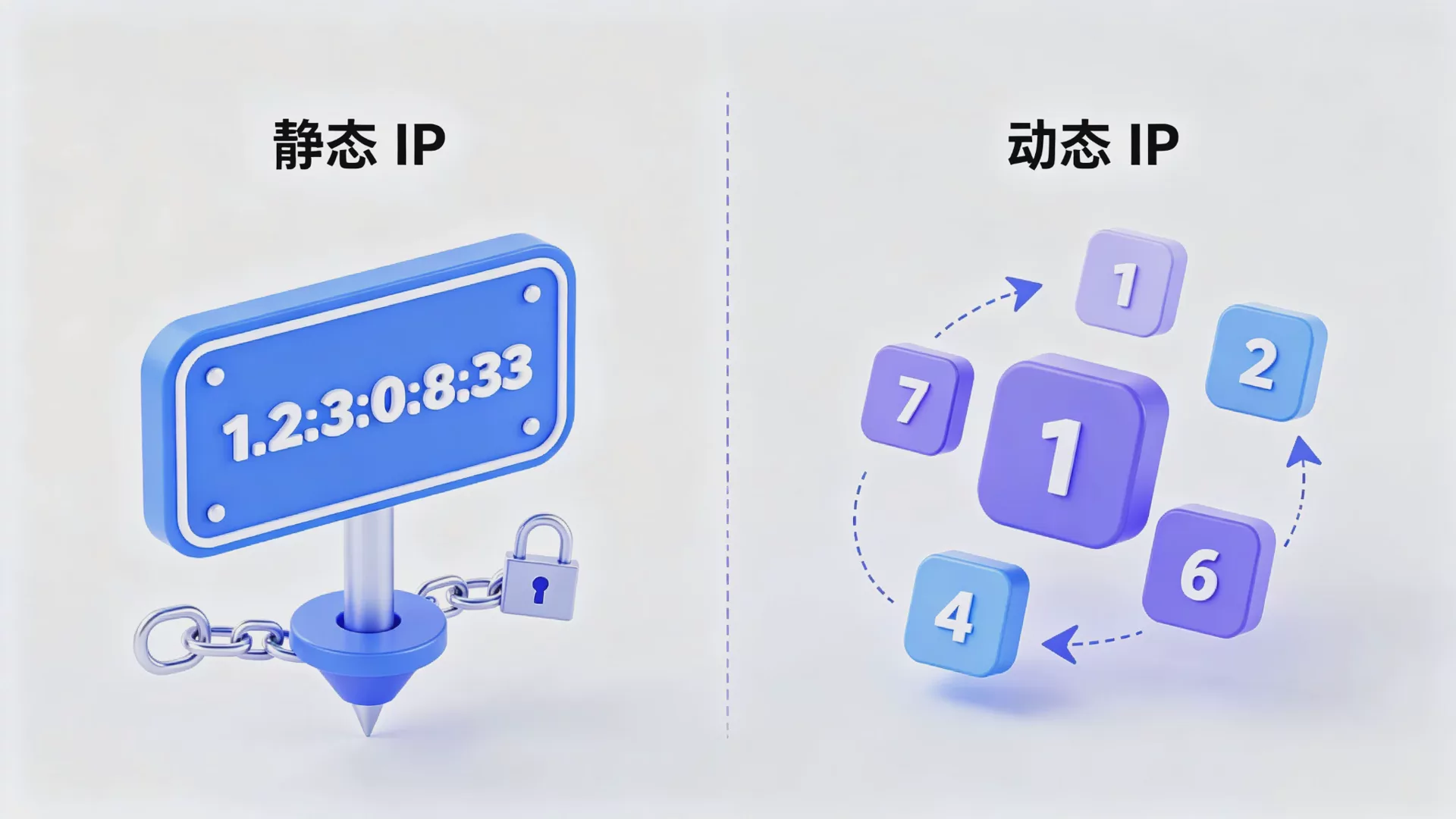
Static IP, as the name suggests, is an IP address that remains unchanged for an extended period. For businesses that need to log in to the same account over the long term, a static IP can reduce frequent changes to the login environment and make it easier to maintain account stability. Therefore, whether operating Facebook and TikTok or managing an Amazon store, a static IP is a relatively common choice.
Dynamic IP will automatically switch IPs according to certain rules. The IP may change with each connection or rotate automatically at set intervals. Its biggest advantage is that it provides a larger IP pool, making it less likely that a large number of requests will be concentrated on the same IP. Therefore, it is more suitable for businesses that require frequent IP changes, such as web scraping, SEO data monitoring, and price research.
However, this does not mean that dynamic IPs are necessarily unsuitable for account operations. In fact, many residential proxies are dynamic residential IPs themselves. As long as the switching frequency is reasonable, they can also meet the needs of some business scenarios. What really matters is whether your business needs to maintain the same network identity over the long term.
For many users, choosing between a static IP and a dynamic IP involves another question in addition to business requirements: where to purchase reliable proxy resources.
If you are already using P1 fingerprint browser you can purchase and manage proxy IPs directly when configuring proxy information for your accounts. P1 integrates multiple mainstream proxy service providers, so there is no need to frequently switch between different platforms to purchase and configure proxies. After the purchase is complete, you can also bind the proxy to the browser environment with one click, reducing the steps required to enter proxy information manually. This is more convenient for teams that need to manage multiple accounts.
VI. Dedicated IPs and Shared IPs: Balancing Stability and Cost
In addition to static and dynamic IPs, proxy service providers also often mention dedicated IPs and shared IPs.
Dedicated IP refers to an IP resource provided exclusively for a single user, without being shared with anyone else. Since fewer people use it, the IP's history is more controllable and less likely to be affected by other users' behavior, making it generally more suitable for scenarios with high account stability requirements, such as advertising, social media management, and cross-border e-commerce.
Shared IP means that multiple users share the same pool of IP resources, so it is generally more affordable and can also provide a larger IP pool. For ordinary web browsing, data collection, or one-time business operations, shared IPs are usually sufficient.
Simply put, if your business centers on accounts, you are generally better off prioritizing a dedicated IP; if your focus is accessing websites, a shared IP is often sufficient.
High-Quality IPs Alone Are Not Enough to Establish a Complete Online Identity
Finally, there is another issue that is easy to overlook.
Many people believe that as long as they purchase a residential IP or native IP, platforms will automatically treat them as real users.
In reality, when most overseas platforms determine user identities today, they consider far more than just the IP address. Information such as browser fingerprints, cookies, time zones, languages, fonts, Canvas, and WebRTC also factors into risk-control assessments.
For example, if your IP appears to be from the United States, but your browser language remains Chinese, your system time zone is still Beijing Time, or multiple accounts consistently use the same browser environment, even a high-quality IP may attract the platform's attention because of an inconsistent online identity.
Therefore, for businesses such as cross-border e-commerce, overseas social media management, and advertising, it is generally recommended to combine high-quality proxy IPs with P1 Fingerprint Browser Used together. The former provides a stable, reliable network exit, while the latter creates an independent browser environment for each account, keeping information such as the browser fingerprint, cookies, local storage, time zone, and language consistent to form a more complete online identity.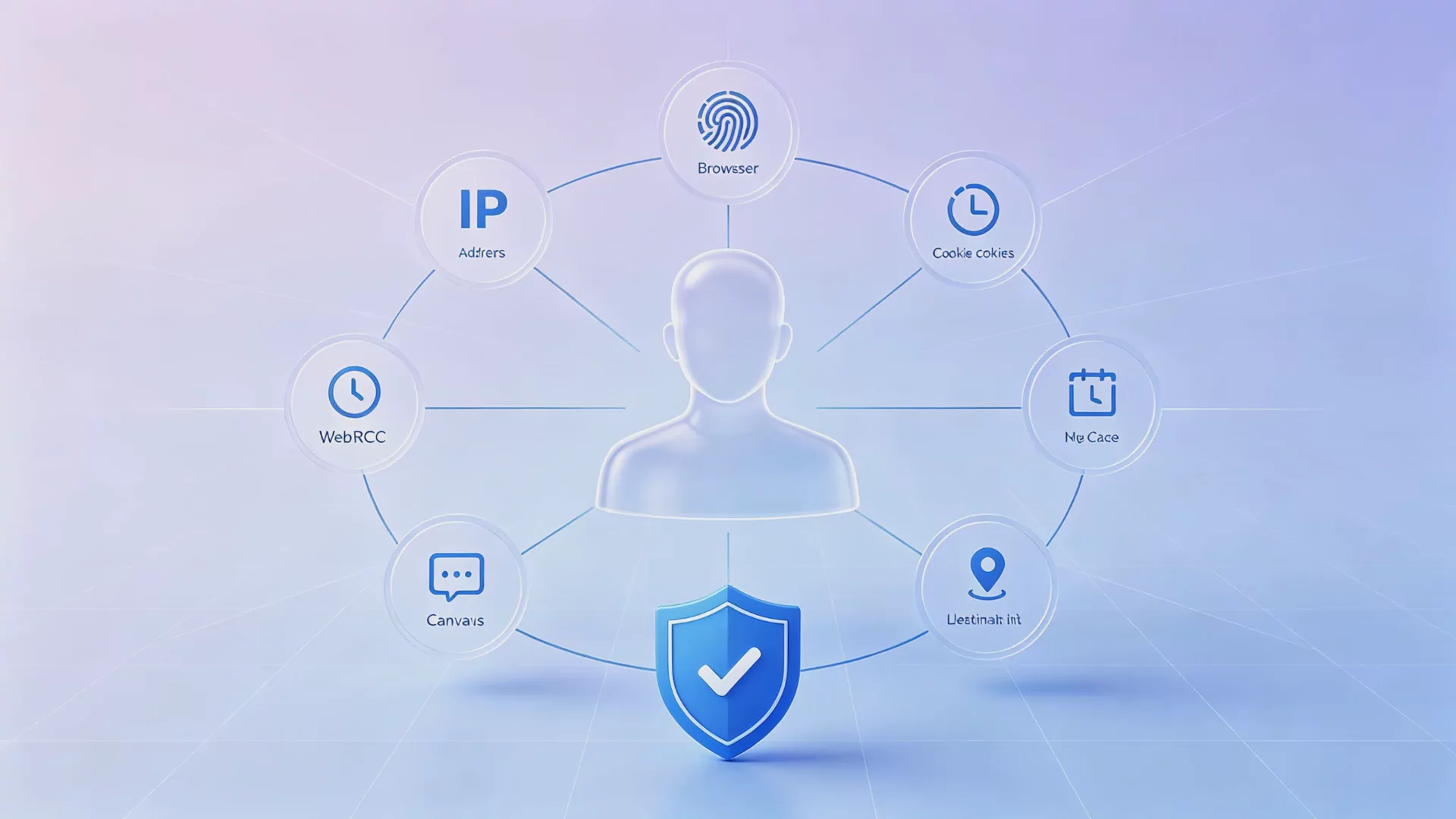
- Independent browser fingerprintsEach account has unique Canvas, WebGL, font, time zone, language, and other fingerprint parameters, completely avoiding platform association detection
- Clean proxy IP environmentSupports binding independent residential IPs, hosting provider IPs, or data center IPs to ensure that each account's network exit is completely isolated
- One-click environment switchingNo need to change devices frequently; manage dozens of independent account environments from a single dashboard
- Cookie and local storage isolationThe local data of each environment is completely independent, so login states do not cross-contaminate
- Automation support: Support batch management of multiple accounts, improving operational efficiency
For teams that need to manage multiple overseas accounts over the long term, this combination of "proxy IP + fingerprint browser" is safer and more controllable. P1 also supports window synchronization and automation scripts, so scenarios requiring scaled account warming or automated operations when expanding overseas can be easily handled through P1, eliminating tedious tasks and enabling efficient management of various accounts.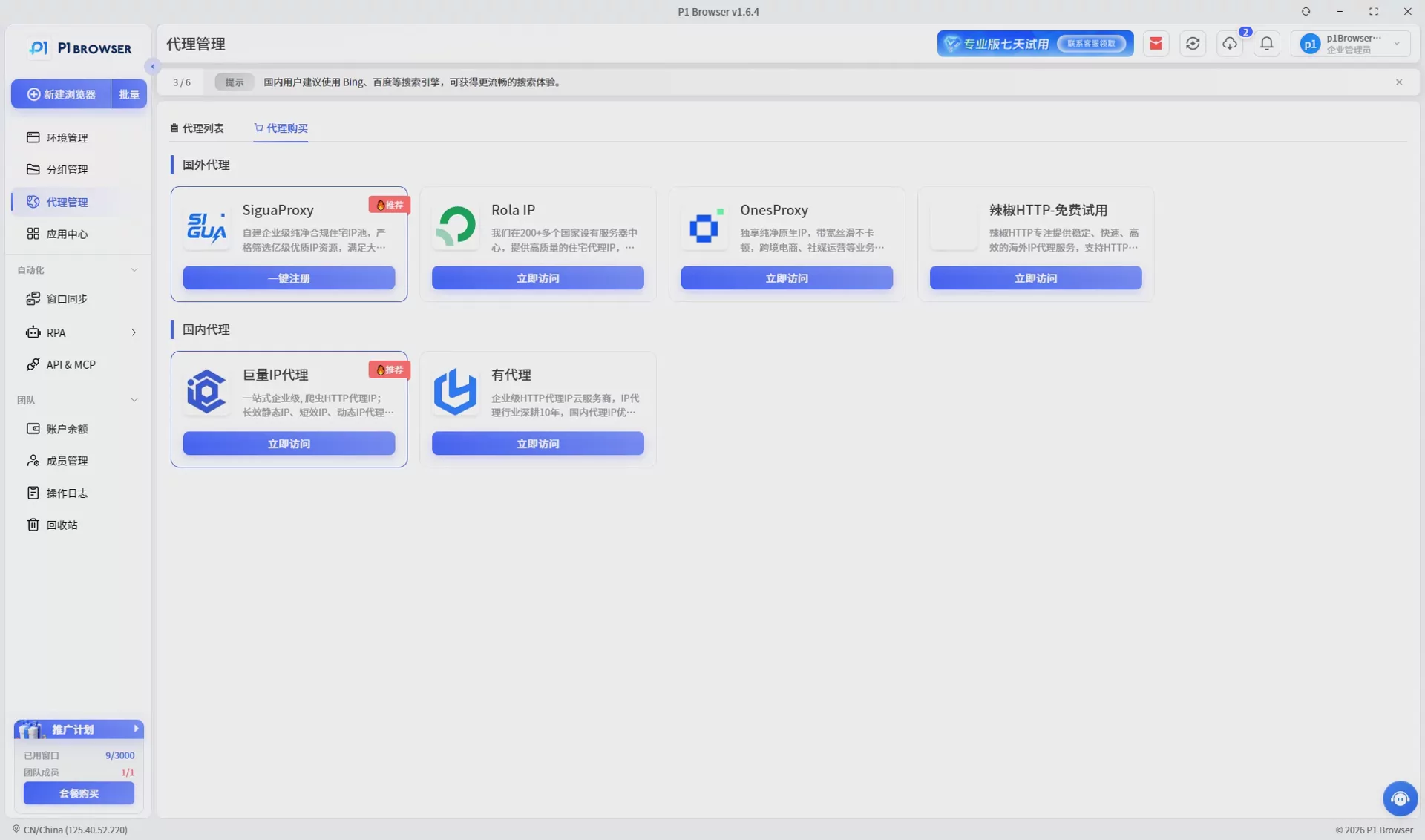
Try the P1 Fingerprint Browser Now
Build a complete, trustworthy network identity for your overseas business, making multi-account operations safer and more efficient.
Start Using It for FreeIn Conclusion
Residential IPs, native IPs, broadcast IPs, data center IPs, static IPs, dynamic IPs… There may seem to be many names, but they all address the same fundamental question: how to provide the right network identity for different businesses.
When choosing a proxy, rather than getting caught up in which concept is more advanced, it is better to first clarify your business needs: Are you managing accounts over the long term or collecting data in bulk? Are you running ads or carrying out AI automation? Once your needs are clear, choosing the corresponding type of IP is often more important than blindly pursuing a certain "popular IP."
After all, an IP is only one part of a network identity. For teams that need to conduct overseas business over the long term and with stability, only by combining high-quality proxy IPs with a stable browser environment can they truly establish a trustworthy, consistent, and secure network identity.