


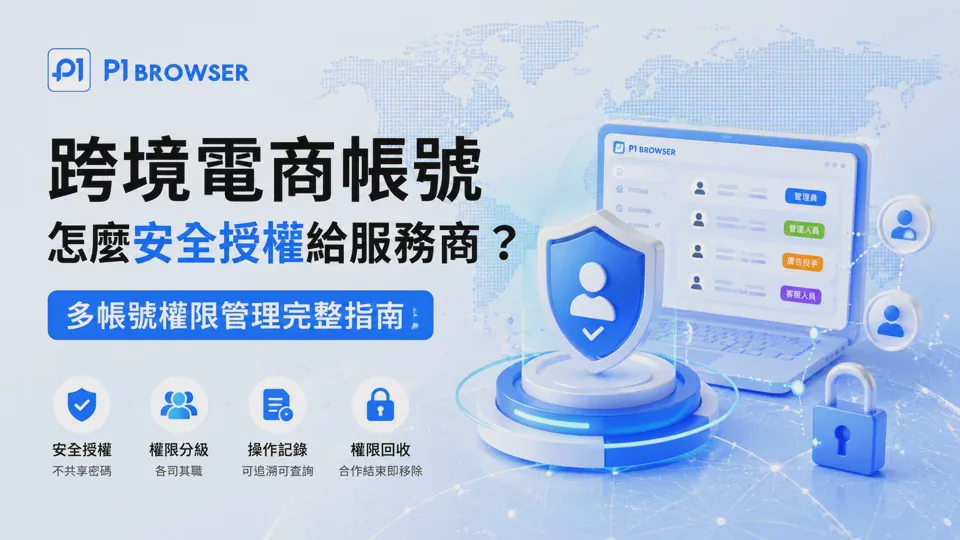
As the cross-border e-commerce industry continues to mature, sellers’ work is no longer handled entirely by a single person or team. Product selection, advertising, store operations, customer service, appeals, data analysis, and other tasks often require the involvement of different professionals or third-party service providers.
However, in actual collaborations, many teams still use the most traditional method:Directly handing over their account usernames and passwords.
It may seem convenient, but problems soon follow. Once a service provider has the complete login information, they may gain access to store settings, account security, payment information, and other sensitive content at the same time. After the collaboration ends, the seller still needs to change the password and remove access. The entire process is not only cumbersome but can also leave management gaps.
Therefore, for cross-border e-commerce teams that require collaboration among multiple people, the question truly worth considering is no longer 「Should we hand the account over to someone else?」 but rather:
How can a team or service provider complete the necessary work without directly sharing the password?
I. Why Does Directly Sharing Account Usernames and Passwords Create Management Problems?
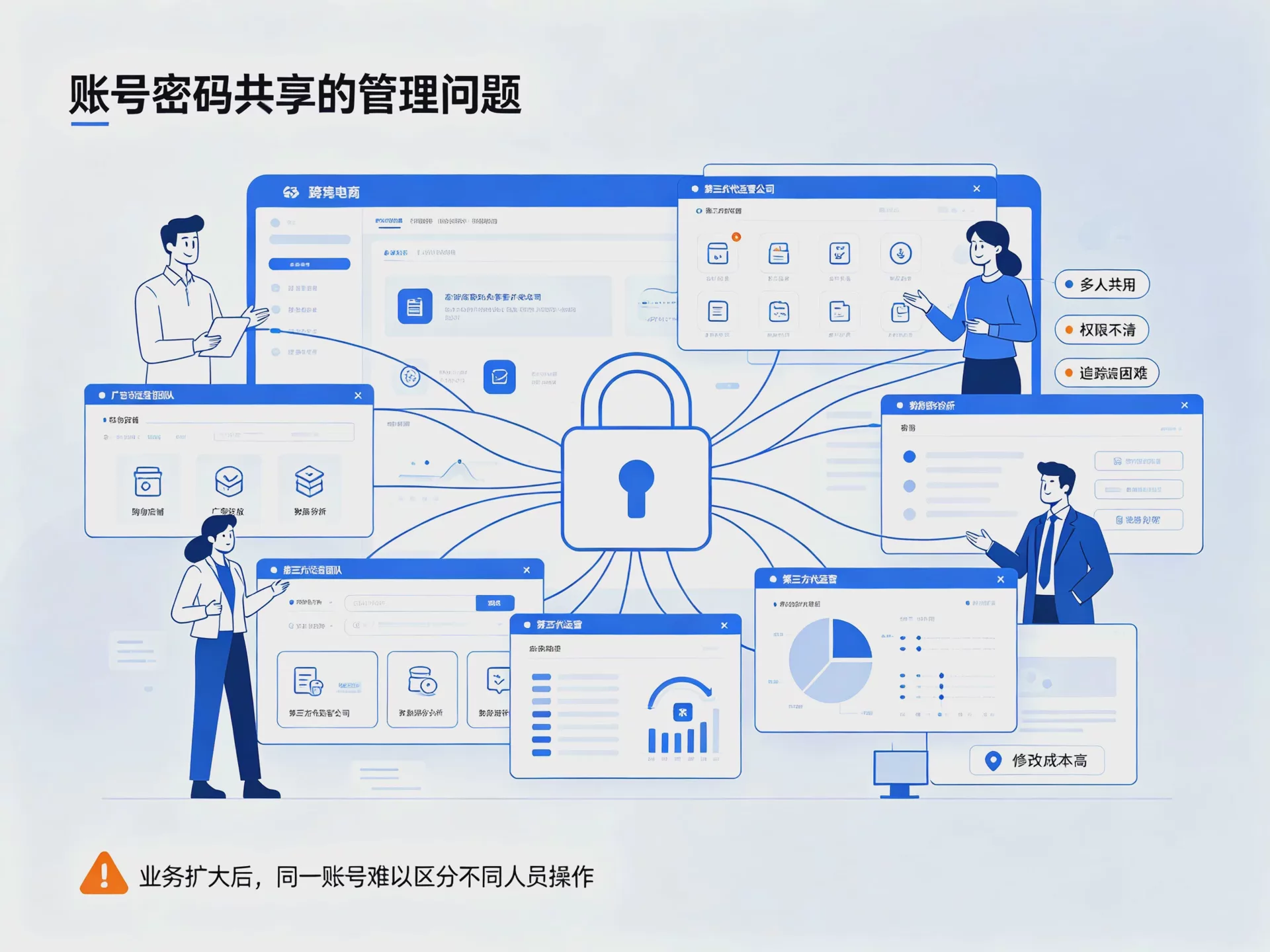
In the early days of cross-border e-commerce, directly logging in with usernames and passwords may have been convenient when a seller managed one or two stores. But as the business gradually expanded, with multiple platforms, multiple stores, and multiple employees operating simultaneously, this approach could easily lead to chaotic account management.
For example, an Amazon, TikTok Shop, or Facebook Ads account may simultaneously involve:
- Store operations staff
- Advertising team
- Third-party operations agency
- Customer service staff
- Data analysts
If everyone logs in with the same username and password, it is not only difficult to manage, but also difficult to distinguish the actual actions taken by different individuals.
More importantly, once the password is known by multiple people, sellers often need to change the login information when the partnership ends and check again whether any other login permissions still exist.
II. What Cross-Border Teams Really Need Is “Account Authorization,” Not “Password Handover”
The core of modern team collaboration should gradually shift from “sharing account credentials” to “account permission management.”
Simply put, account owners do not need to provide passwords directly to others. Instead, they can use tools or management systems to grant designated members access to specific accounts.
The benefit of this approach is that account ownership remains in the hands of the administrator, while team members receive only the permissions they need to complete their work.
For example:
- Advertising specialists can only access advertising-related backends
- Operations staff are responsible for listing products and managing stores
- Customer service staff only handle orders and customer inquiries
- Administrators retain account settings and core permissions
This makes team collaboration clearer and prevents everyone from having full control over the account.
Why Does Multi-Account Management Require Permission Levels?
In cross-border e-commerce, different people are responsible for different tasks, so they should not receive exactly the same account permissions.
If a regular operations employee can modify all settings, manage other members, and even access payment or business data, the risks of account management will naturally increase.
A more reasonable approach is to createtiered permission management。
Administrator permissions
Administrators are responsible for accounts, team members, and core settings, and typically have the highest level of administrative access.
Operations personnel permissions
Operations personnel are mainly responsible for product management, content updates, and daily store operations, and do not necessarily need access to core account settings.
Service provider permissions
Third-party service providers typically only need to complete specific tasks, such as advertising, Listing optimization, or store operations, so the corresponding scope of access can be set according to the nature of the collaboration.
This approach can prevent the situation where “handing over one account means handing over all permissions.”
Fourth, permissions should be quickly revoked after the collaboration ends
Cross-border e-commerce businesses and service providers typically work together for a set period, such as for short-term advertising, store diagnostics, or seasonal operations.
If a service provider still retains the account login method after the partnership ends, it may increase subsequent management costs.
Therefore, an ideal account management approach should support:
- Setting an authorization period
- Revoking account access at any time
- Removing specified team members
- Viewing who currently has access to the account
For teams managing multiple cross-border e-commerce accounts, permissions can be added and revoked quickly, making this more efficient than frequently changing passwords.
Sensitive operations should be separated from daily operations
In store or advertising account management, some tasks are part of daily operations, such as listing products, modifying content, and viewing data.
However, some other operations are more sensitive, such as:
- Changing login information
- Adding administrators
- Adjust payment methods
- Modify business data
- Manage core security settings
Therefore, a mature team management system should separate daily operations from core account permissions.
Team members can complete their own work, but that does not mean everyone needs access to all sensitive settings.
This is also an important reason why many large cross-border teams have begun to focus onaccount permission controlas an important consideration.
VI. Why Are Operation Records Important for Team Collaboration?
When multiple people jointly manage the same store or account, one of the most common problems is:
“Who actually performed this operation?”
For example, a product price may be changed, advertising settings adjusted, or an important operation may behave abnormally. Without any records, teams often have to rely solely on manual inquiries.
Therefore, operation logs are very important for multi-account management.
With complete operation records, administrators can gain a clearer understanding of:
- Which member used the account
- When the operation was performed
- The operations performed by team members
- Whether there were any anomalies in account usage
For sellers, this helps improve management transparency; for service providers, it also makes the scope of work clearer and avoids unnecessary communication issues caused by incomplete information.
VII. How Can the P1 Fingerprint Browser Assist Teams with Account Management?
For cross-border e-commerce teams that need to manage multiple platforms, multiple accounts, and multiple team members, browser environment management is also an important part of daily operations.
P1 Fingerprint BrowserIt can help teams create different browser profiles, allowing different business accounts to be managed in relatively independent working environments.
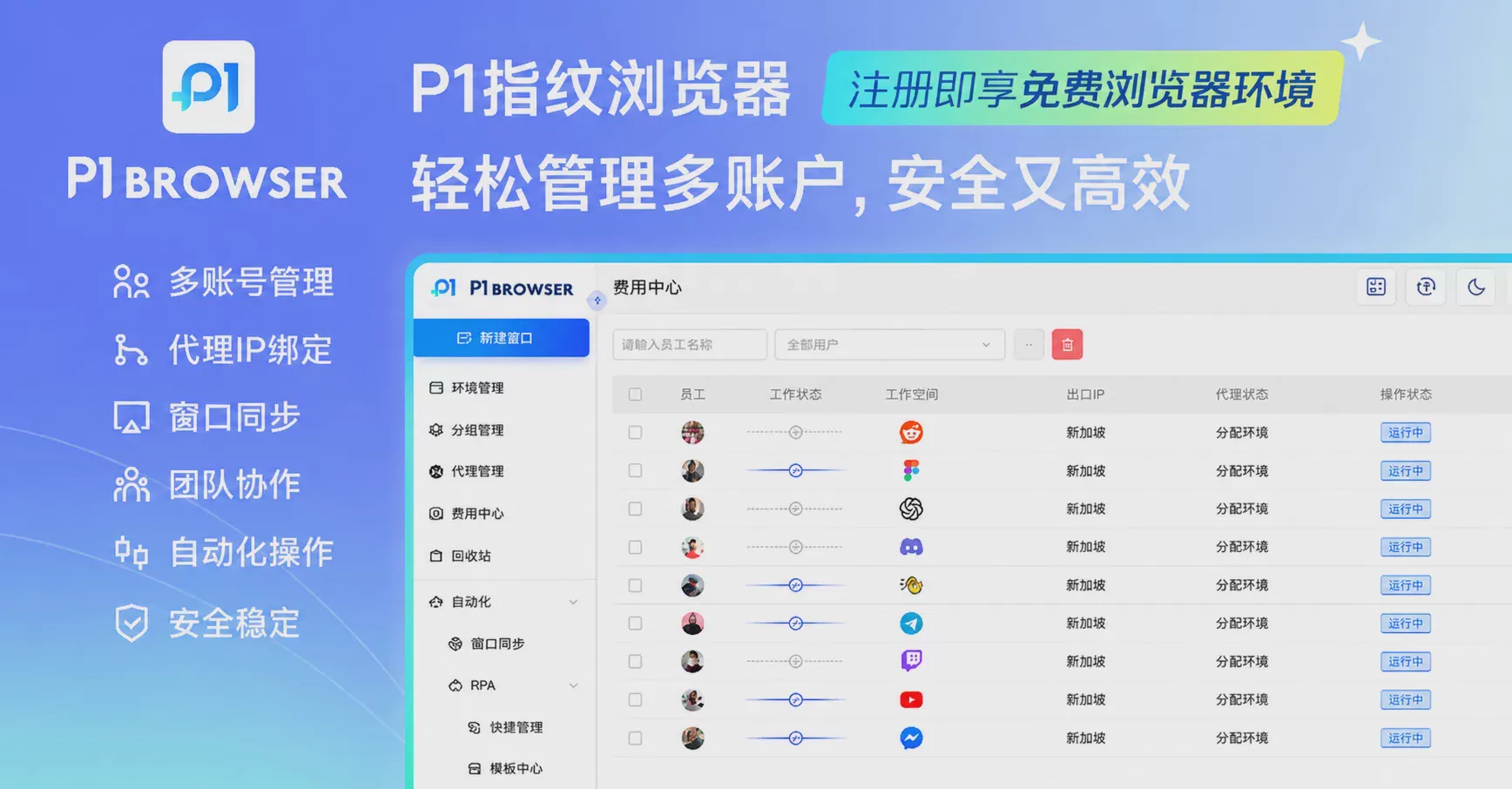
In team collaboration scenarios, managers can assign accounts and environments based on different business needs, allowing members to complete relevant operations in designated work environments.
This approach is particularly suitable for:
- Cross-border e-commerce multi-store teams
- Facebook advertising teams
- TikTok multi-account operations
- Overseas community and social media management teams
- Cross-border e-commerce service providers
As the number of accounts increases, unified environment management and team collaboration can reduce the burden of manually recording account information and make daily management processes clearer.
VIII. Creating a Secure Cross-Border Team Collaboration Process
To manage multi-account operations over the long term, it is recommended not to rely solely on Excel spreadsheets to store account passwords, nor to have all members use the same login method.
A more合理 process should be:
- Centrally manage kernel account information through an administrator
- Create different accounts or browsing environments based on work requirements
- Authorize designated work environments to the corresponding members
- Clearly define team responsibilities and permission scopes
- Regularly review accounts and member permissions that are no longer in use
- Revoke relevant access permissions promptly after the collaboration ends
The purpose is not to make the management process more complicated, but to ensure that everyone is responsible only for the work they need to complete.
Conclusion: Good team collaboration should not be built on “handing over passwords”
As cross-border e-commerce has gradually evolved from individual selling into team-based, professional operations, account management practices also need to be upgraded accordingly.
Traditional account-and-password handoffs may be simple, but as the number of team members, stores, and service providers grows, they can easily lead to permission confusion.
By contrast, creating clearaccount authorization, permission management, environment allocation, and operation recordsA mechanism that makes collaboration among cross-border e-commerce teams more transparent.
Truly efficient multi-account management is not about giving everyone full access, but about enabling each member to complete their work within the scope of their responsibilities.
For teams managing multiple cross-border e-commerce accounts, moving from “sharing passwords” to “managing permissions” will be an important step toward creating a long-term, stable collaboration process.