


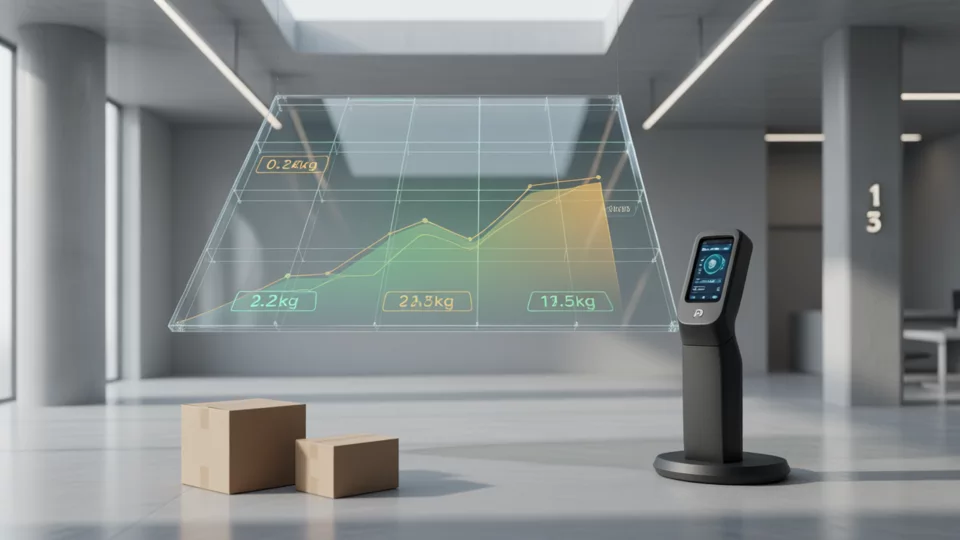
Before shipping, you typically have three types of goods: low-value lightweight items, high-value urgent items, and medium-to-large batch items. Don't compare fulfillment channels blindly; follow this order: first check weight tiers and customs clearance requirements, then compare door-to-door unit prices, and finally calculate peak-season surcharges and loss costs. This approach helps avoid the trap of "focusing only on freight costs while ignoring risks."
Parcel services and dedicated lines are not simply "better or worse"; they are optimal solutions under different dimensions. Understanding the boundaries between the two, combined with compliant declarations, allows you to keep fulfillment costs within a reasonable range.
Before shipping, first categorize the three types of goods: lightweight small items, medium-to-heavy items, and high-value urgent items
Under different weight tiers, goods values, and transit time requirements, the advantages and disadvantages of parcel services versus dedicated lines can reverse. Classifying goods first, then matching them to the appropriate channel, is the first step to avoiding decision-making errors.
- Lightweight small items (0-2kg general goods)Small parcels: low-value trial orders, daily restocking. Default to small parcels.
- Medium-heavy items (2-15kg)Mixed categories, large-item restocking. Compare dedicated lines first.
- High-value urgent items (single item exceeding 5,000 yuan or must arrive within 48h)High-end consumer electronics, luxury apparel. Use dedicated lines with commercial insurance.
Core differences: Cost, transit time, customs clearance, and after-sales risks between small parcels and dedicated lines
The four points that most affect profit, determining whether sellers will find channel costs completely eroded by year-end.
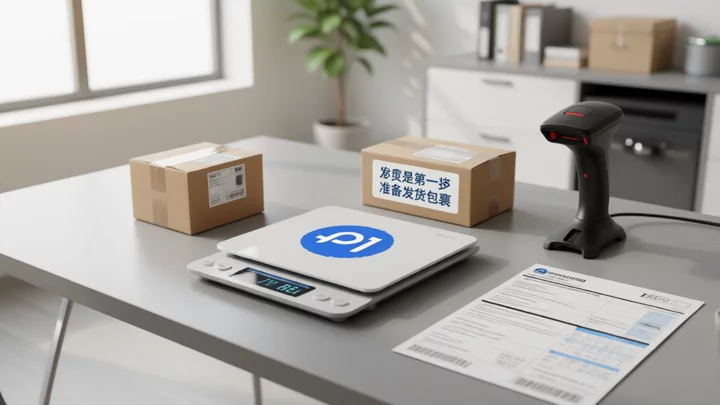
| Comparison dimension | Cross-border small parcels | Cross-border dedicated lines |
|---|---|---|
| Billing basis | Actual weight / volumetric weight, whichever is greater | The greater of volumetric weight and actual weight, with tiered pricing by weight segment |
| Promised delivery timeframe | 15-30 days (not guaranteed) | 7-15 days (with guaranteed delivery timeframe) |
| Customs clearance responsibility | Last-mile carrier performs random customs clearance, high risk of port dwell | Dedicated line clearance throughout, high certainty of customs clearance |
| Lost package compensation | Limit usually 30-50 CNY, full compensation is rare | Compensation based on insurance policy / cargo value, usually full compensation or assessed damage payment |
Under the premise of compliance declaration, the certainty of customs clearance for dedicated lines directly reduces the risk of destruction caused by port delays. If platform store operations are involved, attention must also be paid to permission mapping for logistics tracking number feedback in multi-account environments to avoid errors in ERP writing to the wrong store; refer toeBay, Walmart, and Etsy Seller Center practical operations: Multi-account operation tools and key points for store management to understand anti-error strategies for backend tools.
How to calculate cost differences: door-to-door unit price, peak season coefficients, and hidden fees
Accurately calculating costs cannot rely solely on the price for the first kilogram; you must calculate the door-to-door unit price:Door-to-door unit price = First-leg + Customs clearance + Last-mile delivery + Surcharges. Small parcels are priced by the gram, while dedicated lines usually start at 0.5kg. For individual items with a cargo value exceeding 2kg, the cost per kilogram for dedicated lines is often lower in contrast.
Peak season coefficients must be factored in during months 9-12 and major promotional periods: dedicated line prices increase by 15-25%, while small parcels face significantly prolonged delivery times or even refusal due to tight capacity. Meanwhile, remote area delivery fees, fuel surcharges, and port delay costs resulting from declaration discrepancies are hidden fees that must be budgeted for. If customs holds the shipment due to inconsistent declarations, port delay fees are calculated daily, making it extremely easy to result in a fulfillment loss for the single item.
Channel combinations by scenario: Selection recommendations for 6 common business scenarios
Translate methods into directly executable selection results, matching the optimal fulfillment solution for different business scenarios:
- Low-value trial orders (unit price < 30 yuan): Use 100% small parcels, as the cost of lost items is acceptable.
- High customer order value (unit price > 500 yuan): Defaults to dedicated lines, with mandatory commercial insurance.
- Peak season volume surge: Run dual channels in parallel. Send standard goods via dedicated lines to avoid small parcel congestion, and use small parcels for high-margin express shipments to protect profit.
- High return rate categories (e.g., apparel): Choose dedicated lines with overseas return warehouses to reduce reverse logistics costs.
- Items with batteries/liquids/magnets: One-vote veto on small parcels; you must choose dedicated lines that support special cargo.
- Bulk inventory restocking (> 50kg): Use ocean freight dedicated lines or overseas warehouses; the cost of small parcels is not viable.
Before product selection or listing, always confirm whether the channel supports your goods' attributes to avoid discovering channel rejection after shipment. For related product selection and pre-screening logic, refer to How to implement 2024 cross-border e-commerce compliance policies? A checklist of declaration, tax, and platform rules that sellers must check compliance check items in the
Understand at a Glance: Cost–Transit Time Combinations by Weight Bracket and Destination
The “Weight Bracket × Transit Target” matrix is the most intuitive positioning tool before shipment.
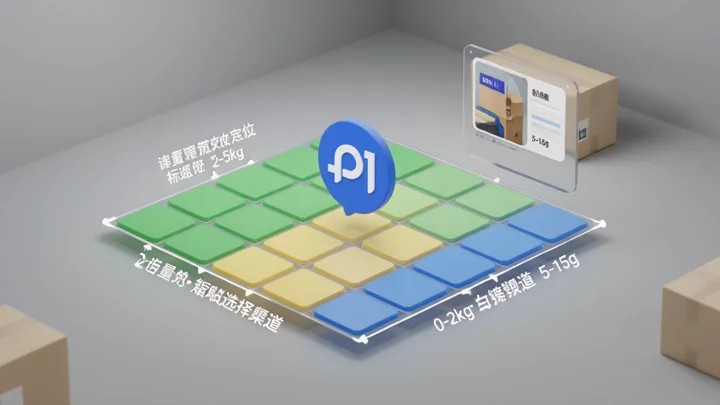
In the matrix, the vertical axis represents 0-2kg, 2-5kg, and 5-15kg, while the horizontal axis lists “No Rush,” “Standard 15 days,” and “Urgent 7 days.” For items in the “Under 2kg with No Rush” zone, select the small packet service by default; for items in the “Over 2kg requiring 7 days,” you must choose a dedicated line and verify the promised transit time. For sellers operating on multiple platforms who need rapid restocking and also manage profit calculations, mastering this positioning method can significantly reduce communication costs.
Final Pre-Shipment Checklist: Declaration, Insurance, Returns, and Compensation Boundaries
After deciding on the shipping channel, you must verify four risk control actions to avoid overlooking sunk costs by focusing solely on shipping fees:
- Declaration ConsistencyProduct names, materials, and declared value must exactly match the physical goods. Under-declaration is strictly prohibited. If under-declaration triggers inspection, the goods will be destroyed without compensation.
- Insurance MatchingHigh-value shipments must be covered by commercial insurance. The logistics insurance included in dedicated lines typically covers only shipping fees, whereas commercial insurance compensates based on the declared value of the goods.
- Return Attribution: Confirm whether the refund is a "return to original payment method" or a "return to overseas warehouse"; the cost allocation varies significantly across different channels.
- Compensation Cap: Clarify the liability cap of the logistics provider. Small parcels are highly unlikely to receive compensation for the full cargo value; dedicated lines typically determine losses and pay compensation proportionally.
Common Pre-Shipping Issues
Low-value, light, and small items (<2kg): Which is a worse deal, a dedicated line or a small parcel?
If the shipment is pure general cargo under 2kg and isn't urgent, sending it via a dedicated line usually results in a loss. This is because dedicated lines have a 0.5kg minimum chargeable weight and a high unit price, whereas small parcels, despite their longer transit time, have an extremely low first-weight charge, giving them a clear cost advantage.
Is commercial insurance a must when shipping via a dedicated line?
Strongly recommended. The cargo insurance included with dedicated lines typically covers only per-item freight or very low declared value. If your average order value exceeds 300 CNY, losing a shipment without commercial insurance is akin to being completely exposed; compensation may not even cover the cost of replenishing inventory.
Will small parcels get stuck during peak seasons?
Yes. Small parcels rely on postal services or small customs brokers for last-mile delivery, which often causes delays of 1-2 weeks or outright returns during peak seasons. For high-value, time-sensitive items, you must switch to dedicated lines during peak seasons to use the “committed delivery time” to offset congestion risks.
How do you account for hidden costs in door-to-door cross-border logistics calculations?
On top of the door-to-door unit price formula, multiply by a 1.2 coefficient as a peak season reserve, then add a separate remote surcharge of 2-5 CNY per ticket. For port storage costs, use the customs policies of 3 core destination markets to conduct 1 small-batch pilot verification before placing orders, thereby mitigating port storage risks in advance.