


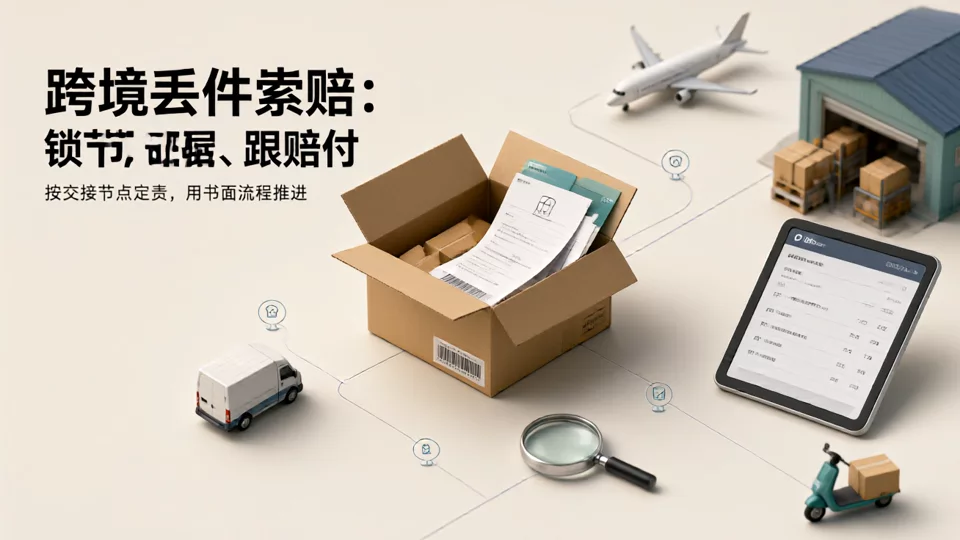
The buyer initiates a 'item not received' case, logistics tracking stops at a transit hub, and the platform refund countdown is underway—this is when two things are most discouraged: immediate refunds and repeatedly urging the logistics provider. The correct sequence is to first determine which handover point the loss is stuck at, immediately secure order-level evidence, then determine the primary claimant. Claims are written processes advanced by nodes, evidence, and time records, not by frequent urging.
First Determine Which Handover Point the Loss Occurred At
Liability for lost shipments is not allocated by 'who touched the package last,' but by handover points. Common four points include: pre-pickup (goods are still in our warehouse, liability is ours), in transit (carrier or freight forwarder), last-mile delivery (last-mile carrier, often manifesting as delivery exceptions), and overseas warehouse shelving (warehouse inbound discrepancies). Different points mean different claimants and acceptance windows; finding the wrong one wastes the claims limit.
To determine the point, first look at three signals: tracking stagnation time significantly exceeds the normal transit interval for that channel; delivery status shows signed by another, address mismatch, or only 'delivered' without delivery records; overseas warehouse inbound quantity does not match the packing list. Map these three types of signals to the four points above to basically identify the party that last handled the package. First lock the point, then discuss liability, and finally file the ticket.
Match Liable Parties and Primary Claimants by Fulfillment Model
For the same lost shipment, the person who signed the transport contract differs, so does the primary claimant. The table below is the starting point for judgment, not a compensation promise; specific amounts, deductibles, and acceptance deadlines are subject to the contract you signed, platform terms, and logistics provider compensation rules.
| Fulfillment Model | Handover Nodes and Responsible Parties | Primary Claim Counterparty | Key Evidence | Common Boundaries |
|---|---|---|---|---|
| FBA Inbound (Freight Forwarder/Ocean or Air Freight) | From the point of dispatch from our warehouse, through the freight forwarder and carrier, to the inbound receipt at the platform warehouse | Contracted freight forwarder, followed by the actual carrier | Inbound appointment number, forwarder's receipt, inbound discrepancy report, packing list | Inbound quantity discrepancies have an independent investigation window and acceptance criteria, subject to the forwarder's contract and the platform's inbound policy |
| Self-shipped Direct Mail/Dedicated Lines | After pickup, responsibility lies with the carrier; the last-mile segment is handled by the delivery provider | The logistics provider or service provider where the order was actually placed; if platform logistics coverage applies, start with the platform entry point first | Shipping labels, weighing records upon handover, complete tracking history, and communication records with the buyer | "Lost in Transit" and "Not Received After Delivery" are two distinct issues with different handling paths |
| Overseas warehouse | Losses during the first-leg segment are the responsibility of the first-leg service provider; losses within the warehouse are the responsibility of the warehouse operator | Determined by the segment where the loss occurred: the first-leg service provider or the overseas warehouse | Inbound receipt, shelving report, inventory discrepancy screenshot, and outbound instruction | Losses within the warehouse are often subject to a deductible or capped at the declared value, subject to the warehousing contract |
| Platform logistics / fulfillment via proxy operation | Transportation nodes are covered by the platform or its designated service provider | Platform claim portal or logistics protection service | Platform order number, screenshot of protection terms, tracking, and refund records | Portions of the same loss already compensated by the platform are generally not re-accepted by logistics providers for duplicate claims |
The difference between FBA inbound logistics and self-fulfillment lies not only in transit time and cost, but also in whose name the shipping contract is signed under, which directly determines who you contact in the event of a lost package.FBA vs. Self-Fulfillment: A Logistics Comparison and Cost/Transit Time Decision Guide provides a more detailed breakdown of the handoff points for both fulfillment models, which can be read alongside the responsibility table in this article.
Evidence Checklist: Four Types of Order-Level Materials Fixed by Timestamp
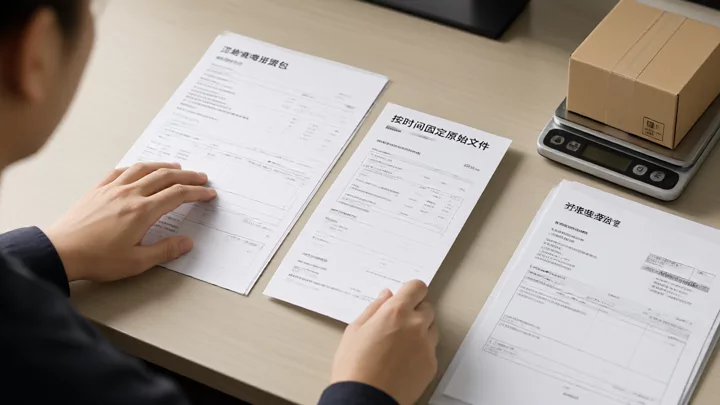
Evidence is not just about 'having it'; it must be preserved when it can be. Tracking evidence can be overwritten or collapsed over time, and buyer communication records may become unrecoverable due to account issues, so packages must be archived on the day of loss, not waiting for the responsible party to request them.
- Order and Transaction Category: Order number, SKU, quantity, recipient address, payment records, and screenshots of the platform claim portal.
- Logistics Category: Shipping labels, weighing records at handover, complete tracking screenshots with time zones, and carrier inquiry ticket numbers.
- Goods Value Category: Purchasing invoices or supplier statements, and cost breakdowns, used to demonstrate the relationship between the declared value and the actual cargo value.
- Communication-related: Original message records with buyers, platforms, and logistics providers; do not just keep chat summaries.
Keep all materials as original files with timestamps, including the order number and date in the filenames. For how to reconstruct per-ticket costs by combining declared value with freight and duties, refer to theCross-border E-commerce Logistics Cost Calculation Tutorial, to avoid unexplainable gaps between the declared value and procurement costs.
Who to claim from and how to write the first ticket
The recommended order is: first, the platform's logistics guarantee or the insured cargo insurance; second, the logistics provider actually handling the shipment; and finally, escalate to the contractual counterparty or the platform's dispute channel. Do not simultaneously seek full compensation for the same loss from both the platform and the logistics provider. If duplicate compensation is verified, it will undermine the credibility of all subsequent cases.
- Confirm the acceptance window: Locate the claim application deadline for this channel in the contract or platform terms, and verify whether it is still within the window.
- Write the first ticket: Provide all necessary details at once to minimize time loss from back-and-forth material supplementation.
- Request a case number: Communication without a case number is not considered formally accepted; always request written confirmation.
- Record the promised response date: Convert the counterparty's verbal assurance of 'handling it soon' into a specific date in the email.
- Reject conclusions backed only by phone responses: all liability determinations and compensation amounts must be documented in writing.
The initial ticket should include: order number and tracking number (or inbound warehouse number), the node where the item was lost and the basis for judgment, supporting evidence for the declared value, the claimed amount and its calculation method, the expected response deadline, and the contact person with contact details. Specify whether the claimed amount covers the declared value, shipping fees, or both, to prevent the liable party from stalling on the grounds of "unclear amount."
Compensation follow-up: ledger fields, timeline, and escalation criteria

The most common reason for failure in lost parcel claims is not insufficient evidence, but a breakdown in follow-up. Use a single ledger to track the status of each case, with fields including at minimum: case number, order number, tracking number, liable party, submission time, promised response date, supplementary materials provided, compensation amount, shortfall amount, and escalation contact.
The timeline proceeds through six stages: submitting the application, written acceptance and obtaining a case number, submitting additional materials as required, the responsible party confirming liability, the compensation payment arriving, and handling any gaps. If the promised response date passes without a written reply, if materials are requested to be resubmitted, or if liability parties blame each other, these should all trigger an escalation rather than continued waiting. The ledger and reconciliation approach can borrow from thetutorial on building a cross-border e-commerce data dashboard for defining metrics, allowing compensation amounts to be cross-checked against original losses in a single table.
Boundaries and Risks: Avoiding Duplicate Compensation and Mischaracterization
Three easily overlooked boundaries:First, portions already compensated to the buyer by the platform usually cannot be claimed in full from the logistics provider for the same loss; second, 'delivered but not received' is a delivery dispute with a different acceptance path than loss during transport, so verify proof of delivery before characterizing it; third, high value with low declared value directly reduces the compensation cap, so verify the declared value and deductible terms before purchasing insurance.
Frequently Asked Questions
How long does it take to get a result for a lost parcel claim?
There is no uniform deadline; it depends on the carrier's claims window and the responsible party's processing speed. A practical approach is to record the response date promised in writing by the counterparty and escalate if there is no reply by that date, rather than waiting for a fixed number of days.
The carrier only compensates based on the declared value. What can be done about the difference for high-value goods?
First, review the compensation limits and deductibles in the contract and insurance policy, then determine whether the difference can be covered by supplementary proof of value or separate insurance. Differences caused by undervaluation are usually not recoverable afterwards.
The platform has already refunded the buyer. Can a claim still be made against the carrier?
You may claim for the unrecovered portion, but you cannot be compensated twice for the same loss. When submitting the claim, state the amount already refunded by the platform and attach the refund record to avoid it being deemed a duplicate claim.