


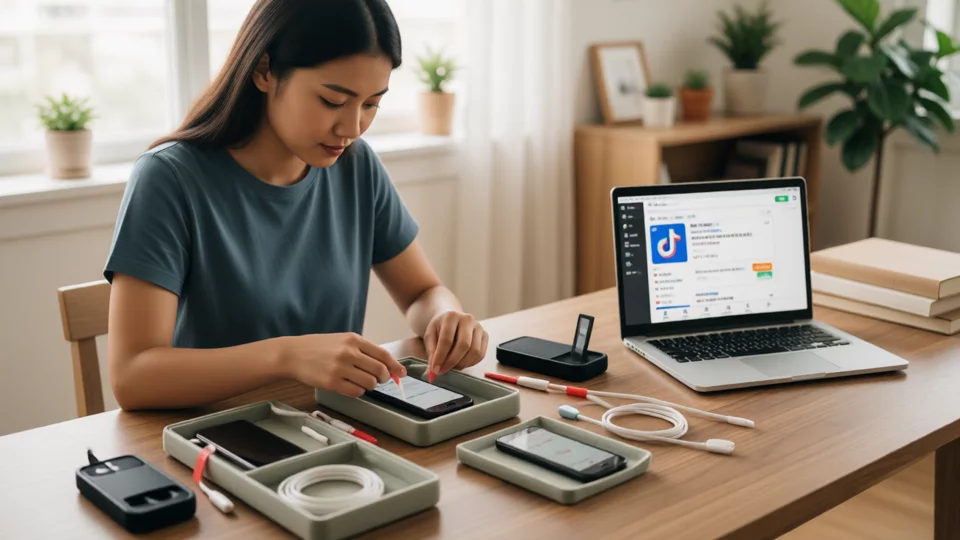
Three TikTok Shop stores, the same computer, the same Chrome, and one operator switching back and forth among three backends. Starting on the third day, every login triggered a verification code; on the seventh day, a linked-account warning was received, and one of the store backends was restricted.
Most people's first reaction is that the network is unstable, but login anomalies often appear before a penalty; it is more like risk control has already begun marking this environment. Handle it in the following actual order: first determine which level the anomaly belongs to, then review how the associations were linked, and finally execute according to same-day stop-loss, three-day isolation, and acceptance before opening a new store.
First determine: which login anomalies are linkage warnings, and which are merely network issues
Not all login anomalies require stopping work. There is only one criterion: whether the anomaly occurs only at the login stage, or has already affected store assets. For the former, you can test the network first; for the latter, you must stop continuing operations in the old environment.
| Symptom | More likely indicates | Urgency | Immediate action |
|---|---|---|---|
| Slow login, failed image loading, CAPTCHA not displaying | Proxy node or local network fluctuation | Low | Switch nodes and retest once; do not repeatedly log in to the same store |
| A CAPTCHA is required for every login, and the frequency is increasing | The environment has been flagged and entered an observation period | Medium-high | Stop switching to other stores in the same browser, and record the time of occurrence |
| Forcibly logged out during operation, then disconnected again after re-login | Session interrupted, environment signals abnormal | High | Stop logging in repeatedly; first establish a dedicated isolated environment for that store. |
| Two store backends kick each other offline; logging into one logs the other out. | Identified as the same session or the same environment. | Highest | Immediately stop operating in the old environment and pause bulk actions for affected stores. |
| Requires rebinding a phone number and upgrading two-factor authentication. | Account-level risk control, often related to shared profile information or shared entities. | High | Verify the registration information and payout entity; do not temporarily rebind multiple pieces of information. |
For these two categories—mutual kicks and forced logouts—do not use "try again" to solve them. Continuing to log in repeatedly in the same environment is equivalent to pushing the operation records of more stores into the same environment. For the overall isolation approach, refer toHow Can TikTok Shop Multi-Account Operations Avoid Environment Issues? Introduction to Browser Isolation Solutions.
Case review: How three TikTok Shop stores were strung together into a linked chain
In this case, there were no prohibited products and no order brushing; the penalty notice only wrote "linked accounts" and did not list specific grounds. Laying out the operation records, the three stores shared the same set of things in four places: one computer with one Chrome, one office broadband line, the same phone number and payment collection entity, and the same employee copying products across stores.
The second and fourth places are the easiest to overlook. During the product listing peak, the three stores used the same exit, and their access rhythms were also consistent; after Store A finished listing new products, ten minutes later the title, main image, and script were moved as-is to Store B.Can a single computer log in to multiple TikTok accounts?It was explained there that running multiple instances of an ordinary browser is essentially sharing the same environment, and switching stores means layering operations onto the same environment record.
Any one of these four places in isolation may just be noise; only when all four appear at the same time do they form a complete linked chain. The goal of the retrospective is to identify the places you are currently sharing, not to buy tools first.
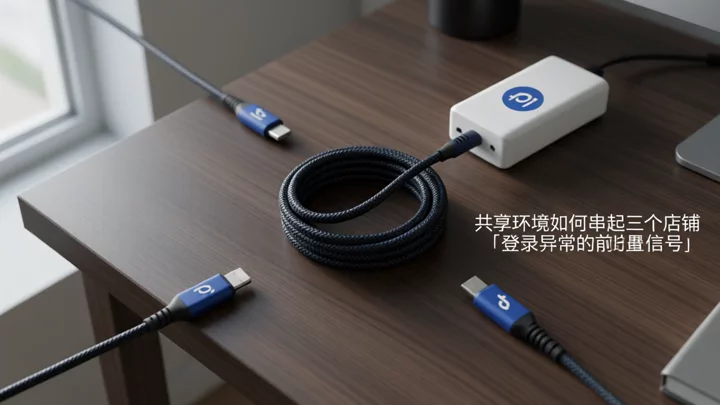
Five types of association signals, ranked from low to high by remediation cost
Ranking by cost is about first handling the parts that are cheapest to change and most easily overlooked, rather than immediately switching tools and buying IPs while leaving the two fatal items—entity information and permissions—in place.
- Network egress. Multiple stores sharing one broadband line or the same proxy node is the most common starting point. Check actions: in each store's backend, separately check whether the login region and IP range overlap, and confirm whether they share one egress during peak hours. The fix is one egress per store, with the node region consistent with the registered entity; do not frequently switch nodes for the sake of being "faster".
- Login environment. Cookies, cache, and local storage in the same browser are shared across stores. The fix is to assign each store a dedicated independent browser environment, maintain the account profile within that environment separately, and avoid cross-logging in with another store.
- Operational behavior. The same person copying titles, main images, or scripts between stores, or several stores performing the same bulk actions during the same period. The behavior itself is usually not grounds for a penalty, but it makes the environment and network signals harder to explain.
- Team permissions. Multiple people sharing one set of account credentials, or employees logging into the backend with their own devices and networks. TikTok's official approach isto use Business Center roles and asset permissions to allocate access scope, rather than sharing login credentials.
- Legal entity and payment information. Business license, legal representative, payout account, return address, phone number, email. This category has the highest remediation cost and is very difficult to replace afterward. Before opening a new store, you need to think clearly about how many stores one entity will cover and how the information will be allocated.
If you need complete configuration standards for the device layer, network layer, and behavior layer, you can refer toHow to manage multiple TikTok Shop stores? A detailed guide to multi-account operationsVerify your shops one by one.
Remediation sequence: stop the bleeding the same day, complete isolation within three days, and verify before scaling.
- Stop the bleeding the same day.Log out the shops that are kicking each other offline or being forcibly logged out from the current browser, and clear the shop-related sessions and shared files in this browser; pause actions such as cross-shop product copying and bulk price changes; note the time the anomaly occurred, the shop name, and whether a platform notification was received.
- Complete isolation within three days.One shop, one independent browser environment; the phone numbers, email addresses, shipping addresses, and customer service scripts within an environment are not shared with another shop; one dedicated egress per shop, with the region consistent with the registered entity; after configuration, run one login test in each environment to confirm they will not kick each other offline.
- Verify before opening a new shop.Verify three things one by one: whether the new shop has an independent environment and independent egress, whether the registration information overlaps with existing shops, and whether the person taking over has their own set of permissions instead of sharing the main account. Only go live after all three pass, to avoid stepping into new pitfalls while fixing things.

The two most easily overlooked points in team collaboration and horizontal platform expansion.
Missed point one: the accounts are isolated, but the people are not.If the same operator has logged into Store A and Store B with their own account, or several people share a single set of master account credentials, that is equivalent to reconnecting the environments that had just been separated onto the same line. Assign permissions by role, and directly revoke the access scope when staff change roles or leave.
Oversight two: Mixing stores from different platforms into the same environment.After TikTok stabilizes, casually logging into the Amazon or Shopify backend in the same browser is a common self-sabotaging move. Regarding Amazon multi-store operations,Amazon Official Seller Announcementstates that typically one account is operated per region, that multiple accounts may be held when there is a legitimate business need, and that policy issues with one account may affect related accounts; Shopify multi-store management likewise relies onemployee permissionsto differentiate access scopes, rather than relying on one set of credentials everywhere.
The boundaries must be clearly stated:Environment isolation can only reduce the association risk caused by shared environments; it does not guarantee passing risk control checks, nor does it replace genuine qualifications, stable networks, and compliant operations. When the reason for a platform's determination is uncertain, account notifications and official policies shall prevail. SeeCan Fingerprint Browsers Pass Risk Control?for a more detailed explanation.
Frequently Asked Questions
Will logging in to the same account from a different computer trigger an association?
A single login from a different device usually does not constitute grounds for a determination. The real risk lies in other store accounts being logged in on the new device at the same time, or in the device having previously been used by another store. Temporarily logging in from a public computer or a colleague's device is a risk there is no need to take.
Do I still need a dedicated broadband connection if I use a fingerprint browser?
A physical broadband connection is not required, but each store must have a stable and independent exit, and the node region must be consistent with the registered entity. If multiple stores share one node, the environment isolation done earlier will be largely offset.
Is a store that has already been judged as associated still worth appealing?
It depends on the type of penalty and whether the materials are genuine and compliant. If the materials are genuine and can demonstrate business independence, submit through official channels; meanwhile, first isolate the stores that are still operating cleanly to avoid the impact spreading further. Do not purchase so-called appeal services.
If one business license is used to open multiple stores, how should the materials be allocated?
Whether the entity can be shared must be based on the platform's rules; do not make inferences on your own. The controllable part is that contact information, customer service scripts, and return addresses are configured independently per store; whether the payment accounts and legal representative information overlap should be verified against the platform's latest requirements before deciding.