



Tuesday morning, 9:47. Your TikTok Shop dashboard shows 2 short videos still unpublished—the algorithm window closes at 10 o'clock, and miss it and your exposure for the day goes to zero. On the split screen, Shopify Seller Center has just flagged 37 SKUs whose gross margins have dropped below the 12% threshold; a competitor just adjusted prices. You only have one pair of hands—which line do you save first? The video goes unposted, the prices go unadjusted, and both lines simultaneously slide into tomorrow's to-do list.
The Daily Pulse of Two Platforms: Why "Splitting Time in Half" Causes Both Sides to Collapse
TikTok Shop's daily pulse iscontent rhythm: short videos, live-stream scheduling, comment replies, flash-sale countdowns—all tied to the urgency that if you don't produce output today, it's gone. The pulse of a Shopify standalone store issystem patrol: On a normal day, a 20–30-minute sweep through inventory, orders, and the abandoned-cart funnel is enough; deep intervention is only needed when a competitor changes prices or a logistics anomaly occurs. Cramming two different rhythms into the same "open the dashboard" action and splitting it equally means you're reviewing Shopify reports while TikTok creatives sit waiting, and by the time you switch back, the algorithm window has already closed. Understanding this asymmetry is the prerequisite for allocating energy—it's not "4 hours on each side," but fixed time blocks set by rhythm, plus automation that compresses "must open every day" into "open only for exceptions."
8-Hour Energy Allocation: Fixed Time Blocks + Flexible Buffer
A same-day applicable template: TikTok Shop content block 2.5h (9:00–11:30, shooting/editing/publishing/comments), Shopify system check 1h (14:00–15:00, inventory + orders + abandoned cart queue), shared-layer inventory/pricing/logistics 1.5h (15:00–16:30), flexible anomaly response 1h (16:30–17:30), learning & strategy review 1h (17:30–18:30).
- TikTok Shop content 2.5h (31%)
- Shopify check 1h (13%)
- Shared layer 1.5h (19%)
- Flexible response 1h (13%)
- Strategy review 1h (13%)
2-person team: one person exclusively manages the shared layer, the other expands the flexible block to 1.5h as a backstop. 4-person team: split TikTok into shooting + editing (two people), assign Shopify checks to alerts, and reduce manual effort to 0.5h. Criteria for adding / cutting / merging / upgrading tools in multi-account scenarios can be found inShopify multi-store seller tool selection logic.

Shifting from 'opening the dashboard every day' to 'opening it only when something's off': 5 automation thresholds
The following 5 thresholds can be set up in your dashboard or tools on the same day. Once configured, under normal circumstances you only open the dashboard during your flexible time blocks:
- Shopify abandoned cart emails + auto-triggered restock alerts when inventory drops below 7 days of sales (Shopify Dashboard → Settings → Notifications, seeShopify Official Help).
- Schedule TikTok Shop flash sale events in one go instead of manually activating them daily (TikTok Shop Operations Tool Configuration Guide, Marketing Module).
- Cross-platform inventory sync delay > 15 min triggers an alert push (ERP or P1Browser inventory sync module, set a 15-minute refresh threshold).
- Shopify gross margin dropping below the set threshold automatically pauses ad spending for that SKU (Shopify → Ads → Rules).
- Unanswered TikTok Shop comments for 48h are automatically pinned as top-priority to-dos (TikTok Shop Seller Center → Message Center; when working in a multi-person team, useBusiness Center Role Permissionsassign comment response ownership).
The fallback plan without an ERP: items 1, 2, 4, and 5 are all completed in the platform's native backend; item 3 is covered by P1Browser's cross-platform inventory monitoring. When you do need an ERP, focus your selection on four capabilities—inventory write-back, profit calculation, multi-account boundaries, and order routing. The decision checklist is atFour Capabilities for Selecting a Cross-Border E-Commerce ERP.
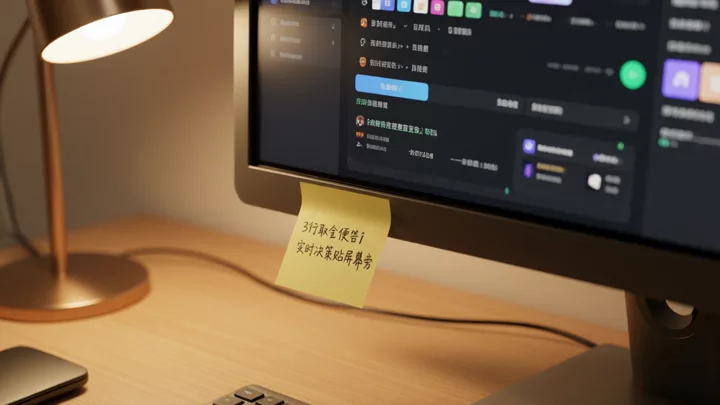
Trade-Off Rules When Two Deadlines Hit Simultaneously
Write it on a sticky note and pin it next to your screen. A 3-line decision matrix:
Line 1 | The 4-Hour Cost of Doing Nothing: Missing TikTok's algorithm window = zero impressions for the day; not adjusting prices on Shopify = losing 3–5 yuan per order.
Line 2 | Who Lacks a Single Point of Ownership: The unassigned line takes priority; avoid "I thought you saw it.".
Row 3 | Can It Be Handed to Automation in 10 Minutes: If yes, set thresholds and let it run; if no, handle it manually.
Real-world example (2-person team): A manages TikTok content, B manages the Shopify system. At 9:50 both lines hit their deadline—B spends 10 minutes submitting a batch of 37 SKU price changes (delegable to the system), A immediately enters the algorithm window to post a video (non-delegable—creative work must be done by a person). If a line repeatedly triggers rate-limiting, first followMulti-Account Isolation Configuration and Recovery Pathperform a 30-minute layered diagnosis, then decide whether time blocks need to be adjusted.
Frequently Asked Questions
Can 1 Person Manage TikTok Shop and Shopify at the Same Time?
Yes, but the shared layer (inventory / pricing / logistics) must be fully automated, otherwise you'll start leaking on both ends from Week 3. Once you've configured the 5 thresholds, your daily manual actions will be limited to content creation and exception response.
How Much Can Daily Effort Be Reduced After Shopify Traffic Stabilizes?
The inspection time block compresses from 1h to 20 min, but inventory alert thresholds cannot be removed—competitor price changes and logistics exceptions won't vanish just because you're "stable.".
How Should You Split Your Effort Between TikTok Shop Livestream Days and Non-Livestream Days?
On live-streaming days, the content block expands to 4h (including 2h live stream + bullet-comment response); strategy review is compressed to 30 min, with the flexible buffer reallocated to unscheduled customer complaints. On non-streaming days, revert to the standard template.
In multi-account operations, should effort allocation be adjusted based on SKU count?
Below 500 SKUs, the manual threshold is sufficient; above 500, ERP batch routing is mandatory—otherwise a single price-change operation will consume the entire inspection time block.