


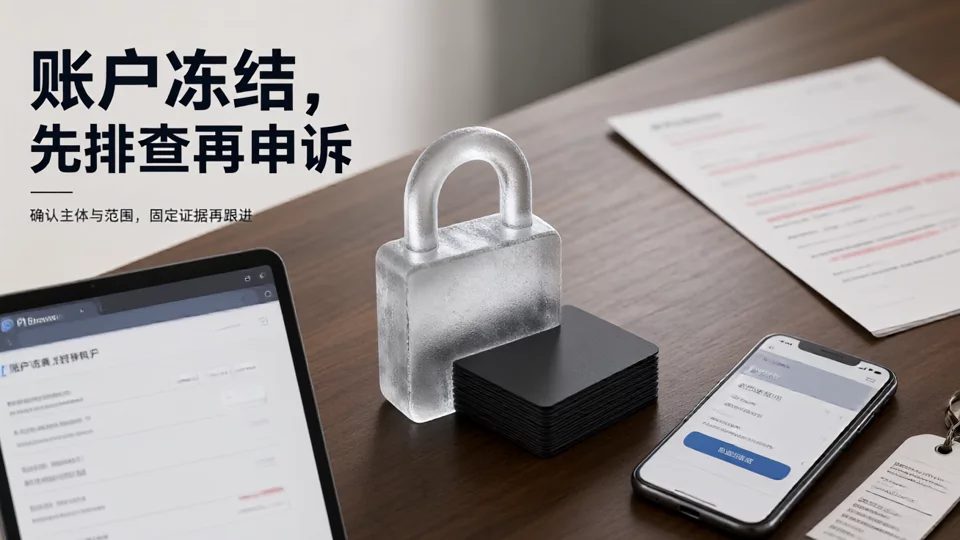
The most common mistake after a payment account is frozen is immediately switching to a different email address or channel and resubmitting the appeal. Before confirming the freezing party, your materials will most likely be sent to the wrong department, prolonging the processing time. The correct sequence involves only three steps: first, confirm who froze the account; second, identify which part of the funds is frozen (in-transit settlements, account balance, or all incoming funds); and third, respond with the specific set of materials clearly requested by the other party.
In cross-border scenarios, 'account freeze' involves at least four types of parties, each with completely different action windows and appeal targets, making a generic appeal letter largely ineffective.
Don't Rush to Appeal: Confirm Who Froze the Payment Account
The basis for judgment comes from three places: who issued the notice, which page in the backend indicates the failure, and at which step the funds are stuck. When the information from these three sources is inconsistent, the signature and terms of the written notice take precedence.
| Freezing Party | Typical Notice Source | Whom to Appeal To | Primary actions |
|---|---|---|---|
| Platform settlement or disbursement freeze | Notifications in the seller center dashboard, prompts on the disbursement page, and performance or compliance emails | Platform compliance or risk management team, using the appeal entry point in the dashboard | Copy down the violation clause, scope of impact, and deadline from the notification |
| Risk management of a third-party payment institution | In-app messages from the payment tool, emails to the registered email address, and failed withdrawal prompts | Risk management or compliance tickets with the payment institution | Confirm whether the issue requires supplementing documents, transaction verification, or account review |
| Bank or card network block | Bank SMS, failed credit, or returned remittance records | Account manager at the opening bank | Ask whether it is a refund rejection, a transaction limit, or a compliance review |
| Judicial or regulatory freeze | Written documents from the court, public security bureau, or regulatory authority, with the bank's notification | As designated by the documents or the representative | First verify the authenticity of the documents and the case number, then seek professional advice |
If the notification only contains vague wording such as “Account anomaly, please contact customer service,” first use the support ticket in the backend to clarify the freezing entity and the scope of the freeze. Do not prepare materials based on guesswork. Store closure and payment freezing are two separate tracks: the former follows the appeal and recovery process for cross-border e-commerce account suspensions, while the latter is handled as described below. If both occur simultaneously, prioritize the one with the greater impact and the closer deadline.
Stabilization actions within 24 hours of freezing
- Preserve evidence.Take screenshots of the full freeze notification, the account status page, and any failed withdrawal prompts, including the system time. Save them in folders organized by store and date.
- Stop adding new funds to that account.Before confirming whether the platform allows multiple receiving accounts, do not arbitrarily switch new order payments to another party's account or a personal account for emergency relief, as this may raise new compliance issues.
- Inventory unsettled balances.List amounts, expected settlement dates, and associated order numbers, distinguishing between 'shipped but unsettled' and 'unshipped but received'.
- List the affected stores.Indicate which stores share this receiving account and which are independent under the same entity but have separate receiving setups; this determines how many appeals are needed later.
- Do not delete or modify records, do not deactivate accounts, and do not resubmit duplicates.Resubmitting will cause tickets to be merged or deprioritized, while deleting or altering transaction records directly weakens subsequent evidentiary capability.
- Select the correct first point of contact.Contact the platform for settlement freezes, and submit tickets to the payment institution for payment freezes; pursuing both in parallel will only result in mutual waiting.
During the freeze period, do not frequently switch between multiple store dashboards using the same computer and login environment, repeatedly triggering verification. Abnormal operations are recorded as risk signals, complicating reviews that were originally just about documentation.
Troubleshoot causes by freeze type: risk control, compliance, trade authenticity, and linked accounts
Compress possible causes into four categories, each with self-checkable signals. Check first, then write, so the appeal content is not empty.
- Login and operation anomalies.Signals include logins from remote locations or multiple devices, multiple users sharing the same backend account, and large-scale price or inventory changes in a short period. Evidence directions include the list of operators, operation time records, and team role descriptions.
- Inconsistent entity information.Signals include the store entity being different from the receiving account entity, failure to update after changes in legal representative or address, and KYC documents nearing expiration. Evidence directions include the business license, legal representative identification, and authorization or ownership statements for the store and receiving account.
- Insufficient trade and fulfillment evidence.Signals include large payments received shortly after a new account was created, highly concentrated orders, and self-fulfillment orders lacking trackable logistics numbers. Evidence directions include matching orders, logistics, and funds; for logistics anomalies, refer tothe evidence organization method for cross-border logistics lost item claimsto supplement the fulfillment chain.
- Linked accounts and abnormal fund flows.Signals include multiple stores sharing one receiving account, transfers between accounts under the same entity, and immediate large withdrawals or fund distribution after receiving payments. Evidence directions include explanations of account relationships and fund usage.
It should be noted that the above signals are only common triggers and do not constitute the platform's decision-making basis. The actual reasons for enforcement should be based on account notifications and official platform policies. Do not include your own speculation as fact in the appeal letter.
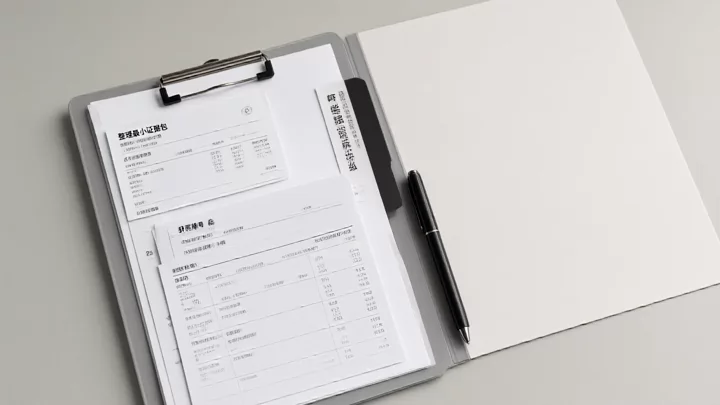
How to write an appeal letter: clearly state the subject, transactions, rectifications, and deadlines at once.
It is recommended to keep the structure of the first appeal letter fixed into six paragraphs: account identification (store name, account ID, freeze notification number), a one-sentence request (apply for review and unfreezing of a specific portion of funds from a certain account), explanations for 3 to 5 representative transactions, an evidence index arranged by number, completed rectification actions and their time points, and specific items requiring the other party's reply. Do not upload the full set of transaction samples; select the fewest number with the most complete amount and fulfillment chain, and mark the rest as 'can be supplemented upon request'.
Regarding the follow-up pace, record the ticket numbers and supplementary document requirements for each submission, and respond within the supplementary document window given by the other party; after submitting supplementary documents, it is sufficient to politely inquire about progress once a week. Do not send reminders every day, and do not make commitments such as 'guaranteed not to happen again' that cannot be fulfilled. Any promises of 'unfreeze within a few days' should not be written in the letter, nor should they be taken at face value.
How to prevent a single account freeze from causing a cascading penalty across multiple stores
When multiple stores face restrictions simultaneously, it is usually not due to the tool itself, but rather the lack of a fixed correspondence among the four layers: entity, environment, payment, and permissions. Realizing the need for such organization only after a freeze occurs will be far more costly.
- Entity Correspondence:Ensure that the registered entity, payment account entity, and invoice and contract entity remain consistent for each store. Retain written documentation for any collection or authorization relationships.
- Fixing the Environment and Operator:Document who is responsible for which stores and from which environment they log in, and verify this regularly to prevent cross-operation caused by temporary shifts. For a specific isolation checklist, refer toChecklist for Association Risk in Amazon Multi-Account Operations.
- Scope of Tool Write Access:When integrating ERP or store management tools, restrict the writable stores and fields to prevent inventory, pricing, and payment configurations from being written to unintended stores. See the key points for auditing multi-platform mixed operations on AliExpress, Shopee, Lazada, and Temu:Multi-Account Operations and Auditing on AliExpress, Shopee, Lazada, and Temu.
- Permissions and Offboarding Revocation:Assign sub-accounts the least privilege based on their roles, revoke access on the day personnel changes occur, and retain operation logs.
Isolation actions during the freeze period are more direct: first, pause new deposits into other stores using the shared payment account, prioritizing the protection of the store with the highest transaction volume ratio and normal fulfillment; completely separate stores with normal settlements from the problematic account to avoid creating new commingling records during the appeal process.
Common Questions
Can I continue shipping after a freeze?
Yes, but it depends on the situation: if the settlement disbursement is frozen, order fulfillment is usually unaffected, and continuing to ship can help prove the authenticity of the trade; if the freeze involves judicial or regulatory documents, first check for any asset disposal restrictions before deciding whether to ship.
The platform says “under review,” should I follow up daily?
No. Respond within the document submission window specified in the notification or ticket, and check the status once a week after completing the submission. High-frequency follow-ups do not speed up the review and may cause multiple emails to be merged for processing.
How do I appeal a self-fulfilled order without a logistics tracking number?
Complete the fulfillment evidence chain with alternative proof: pickup records, forwarder handover receipts, a cross-reference between waybills and orders, and records of buyer confirmation or delivery. Organize these into a comparison table linking order numbers, evidence, and amounts; this is easier to accept than scattered screenshots.
Multiple stores sharing a collection account were frozen. Which store should I handle first?
Start with the store that has the highest transaction volume, the most complete fulfillment records, and the most complete entity documentation. Use this store to establish a successful appeal process and create material templates, then apply the same structure to the remaining stores to avoid submitting multiple statements with inconsistent details simultaneously.