



Last Wednesday, you finished calculating a per-order net profit of $4.2 in Excel, brimming with confidence. This Monday, Payoneer hit your account—after converting USD to CNY and deducting the withdrawal fee, the amount you actually received equaled $3.1. That missing $1.1 wasn't a single overlooked cost line item; it was last-mile logistics, tariffs, payment gateway fees, FX timing differences, and return losses being gradually deducted across staggered windows of 7 to 45 days.
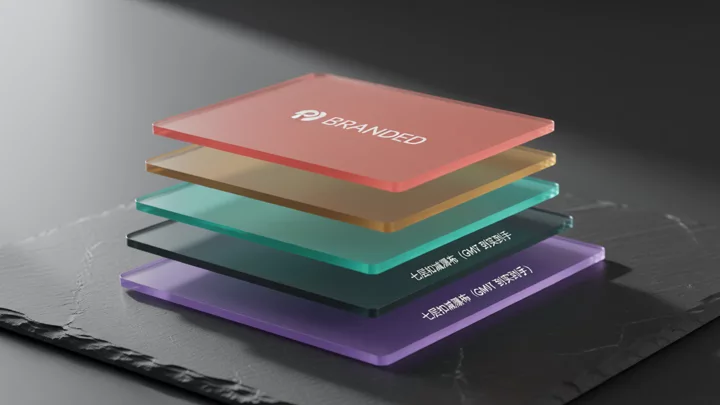
Between Your P&L and Your Bank Account, There Are Seven Layers
Most sellers' profit statements stop at "GMV − COGS − Ads − Platform Commission" and draw their conclusions. What truly devours the profit is the next four layers: last-mile logistics and warehousing, destination-country import taxes and tariffs, payment-gateway fees of 0.8%–3%, and FX drift between the pricing date and the settlement date. Layer in returns/chargebacks and the allocated cost of customer-service labor, and only after all seven layers are accounted for do you arrive at the number that actually lands in your bank account. The first four are "visible costs"; the latter three are hidden losses buried in time lags—they don't occur on the day you place a purchase order, so they're frequently overlooked on the spreadsheet.
Profit Formula: Deducting Layer by Layer from GMV Down to Net Take-Home
- ① Platform Commission: 5%–15% (TikTok Shop approximately 5%–8%, Amazon FBA 15%, standalone stores 0%). For how fee rates align with traffic-acquisition mechanisms, seeCommission and Logistics Cost Comparison Across Major Cross-Border E-Commerce Platforms.
- ② Full Logistics Chain: First-mile + last-mile + warehousing, accounting for 12%–25% of GMV. For tiered decision logic between air freight and overseas warehouses, seeHow to Choose Cross-Border E-Commerce Logistics Methods.
- ③ Tax/Duties: Import VAT is based on HS code tax rates, tariffs vary by product classification, and both differ by trade mode.
- ④ Payment Channel Fees: 0.8%–3%, depending on the channel such as PayPal / Payoneer / PingPong / Airwallex. For details, seeComparison of Cross-Border E-Commerce Payment Methods.
- ⑤ Exchange Rate Settlement Differential: 0.5%–2%, determined by the exchange rate fluctuation between the pricing date and the collection date, multiplied by the channel's settlement cycle.
- ⑥ Returns / Chargebacks: 3%–8%, covering return shipping costs, residual value loss on goods, and chargeback deductions.
- ⑦ Hidden Operational Overheads: Customer support hours, ad CPC amortized per order, and labor for return processing.
At which layer is tax deducted: VAT, customs duties, and withholding tax—what each covers
Does cross-border e-commerce require tax payments?The answer is "it depends on which stage and who withholds":
- 9610 (Cross-border B2C direct mail): Import-stage VAT and customs duties are borne by the buyer or seller. If the declared value per shipment does not exceed 5,000 yuan (the postal tax threshold), customs duty is exempt; otherwise, VAT of 0%–13% is levied in full per the HS code, and customs duty ranges from 0%–50%.
- 9710 / 9810 (B2B Export): Export-stage VAT is exempt. Import taxes in the destination country are borne by the overseas buyer, and the seller does not file import declarations domestically.
- Platform Withholding: Amazon's European marketplace withholds VAT on a country-by-country basis (e.g., 19% in Germany, 20% in France); on select TikTok Shop Southeast Asian sites, orders whose per-customer value falls below the threshold are VAT-exempt.
- Domestic Entity: No matter which trade model you operate under, the annual corporate income tax final settlement cannot be waived. For the licensing and tax registration process, seeCross-Border E-Commerce Business License Guide.
Three-Step Verification: ① Confirm your trade model number; ② Check whether the "Tax withheld" field on the platform settlement page is greater than 0; ③ Cross-reference the filing records in your domestic tax system to confirm no duplicate payment has been made.
An FX Difference Is Not "Profit or Loss" — It Is the Time Lag Between the Pricing Date and the Settlement Date
"Using the day's rate to calculate profit" is incorrect. You set your price at 7.10 USD/CNY on 3/1. The platform settles in USD on 3/28. By the time you withdraw on 4/10, the spot rate has already slipped to 7.24. Layered with the variance in arrival cycles from Payoneer T+3 to PingPong T+7, the FX window gap can reach 0.5%–2%. The actual conversion formula:Net CNY received = Settlement-day USD × Settlement-day spot rate × (1 − Payment channel fee rate). Build in a 1.5% FX buffer at the pricing stage — it's less hassle than watching the market for currency conversion, and it avoids manual repricing every week.
AOV $35, 800 orders/month: plug the numbers in line by line
| Item | Per Order | Monthly Total | % of GMV |
|---|---|---|---|
| GMV | $35.00 | $28,000 | 100% |
| ① Platform commission (8%) | $2.80 | $2,240 | 8% |
| ② Logistics ($1.8 + $3.2 + $0.5) | $5.50 | $4,400 | 19.6% |
| ③ Import VAT (12%) | $4.20 | $3,360 | 15% |
| ④ Payment processing fee (2.9%) | $1.02 | $816 | 2.9% |
| ⑤ Exchange Rate Buffer (1.5%) | $0.53 | $424 | 1.5% |
| ⑥ Returns/Chargebacks (6%) | $2.10 | $1,680 | 6% |
| ⑦ Hidden Operational Overhead Allocation | $1.20 | $960 | 4.3% |
| Product cost (including packaging) | $9.80 | $7,840 | 28% |
| Advertising allocation (12%) | $4.20 | $3,360 | 15% |
| Actual net profit | $3.65 | $2,920 | 10.4% |
The naive formula (GMV − sourcing − ads − commission) = $35 − $9.80 − $4.20 − $2.80 = $18.20, accounting for 52%. After all seven layers of deductions, your actual take-home is $3.65 — a $14.55 gap per order. Replace the percentages in the table with your platform's real rates, and you'll have your own profit line in under 30 minutes.

Frequently Asked Questions
If the declared amount under the 9610 model exceeds 5000 yuan, how much VAT do I actually owe?
Based on the HS code–specific tax rate, most industrial products are taxed at 13%, while agricultural products and books fall at 9% or 3%. A single shipment over 5000 yuan no longer qualifies for the postal/express duty-free allowance; the full import VAT must be declared. You can look up specific rates item by item in the General Administration of Customs HS code database.
After the platform withholds VAT on my behalf, do I still need to file taxes domestically?
Import VAT withheld by the platform is not charged twice. However, your domestic entity still needs to complete the annual corporate income tax settlement (25% on profit, or 5% for small micro-enterprises). The withheld VAT is deducted as a paid cost when calculating taxable profit.
Payoneer vs. Airwallex: which offers a better withdrawal exchange rate?
Both quote the interbank spot rate, with spreads of 0.1%–0.3%. The key difference is the settlement cycle: Payoneer T+1 to T+3, Airwallex T+0 to T+1. The shorter the settlement cycle, the smaller the FX sliding window. When monthly withdrawals exceed 5 ten-thousand USD, Airwallex's fee is about 0.15% lower.
How is the 15% return rate allocated to average profit per order?
Total return cost = return shipping cost $4 + product residual value loss $35×30% = $10.5 + customer service labor cost $0.5, totaling $15. Allocated based on the 15% return rate: 15% × $15 = $2.25 per order, included in layer ⑥.

