


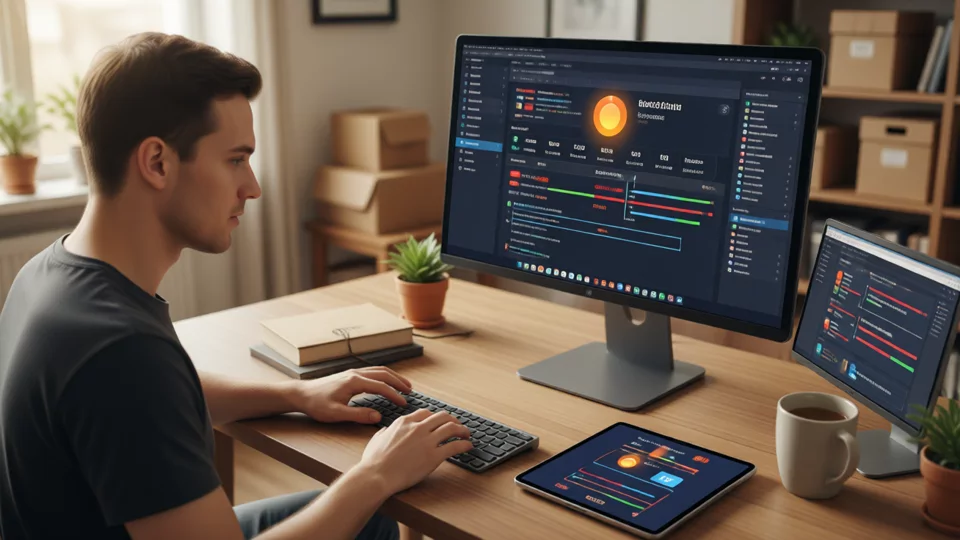

One SKU, 120 units on hand. In Amazon Seller Central, FBA in-transit inventory hasn't been released yet; in TikTok Shop Seller Center, 8 orders have already been deducted; in Shopee Seller Center, another 5 orders have gone through—40 minutes later the inventory panel shows -3, and all three platforms fire oversell alerts simultaneously. This isn't a matter of not having enough back-office systems. The root of your chaos is that three sync pipelines—inventory, pricing, and order routing—lack clear write ownership: who has write access, who is read-only, and whose call wins on conflict. This article unfolds in three phases—diagnosing the break layer, same-day minimal isolation actions, and tool ownership assignment—giving a 2-8 person team a configuration plan they can execute in 20 minutes.
First, Identify the Break Layer: Is Your Chaos in Inventory, Pricing, or Order Routing?
Don't just install tools across the board. Spend 5 minutes determining which layer you're actually stuck on:
- Inventory layer: Whether FBA in-transit inventory (received but not yet listed) and Shopee's instant deduction share an overlapping sync window. When two platforms share the same batch of on-hand stock and no single source of truth for inventory is designated, overselling is only a matter of time. Criterion: the sellable quantity gap for the same SKU across two platforms >2 orders with no alert triggered.
- Pricing Layer: After adjusting the price of the same SKU in Amazon Seller Central and TikTok Shop operations tools, whether the delay on the other end exceeds 30 minutes. Each backend maintains its own prices, making conflicts during promotional periods almost inevitable.
- Order Routing Layer: Whether orders from three platforms converge into the same picking list. When 1 person manages 3 backends and routing is not split, missed and duplicate shipments will erupt in a concentrated surge at month-end.
When all three layers are stuck, prioritize fixing the inventory layer, as it is upstream of the other two. For the specific formulas of FBA's three-tier inventory status and allocation thresholds, refer toA Practical Breakdown of Multi-Account Operations in Amazon Seller Central: From Order Allocation to Inventory Synchronization.
Minimum Isolation Configuration for Three Platforms: The Three Things You Must Do Today
Cross-platform composite signals are more likely to trigger risk controls than internal settings within a single platform. Amazon's official notice states that a policy issue on one account may affect linked accounts (Amazon Multi-Seller Account Health Overview). On the TikTok Shop side, Business Center manages team member access through role and asset permissions, avoiding shared login credentials (TikTok Business Center Creation and Permission Guide).
Across three layers—network egress, login credentials, and operational timing—each platform requires only three tasks per day:
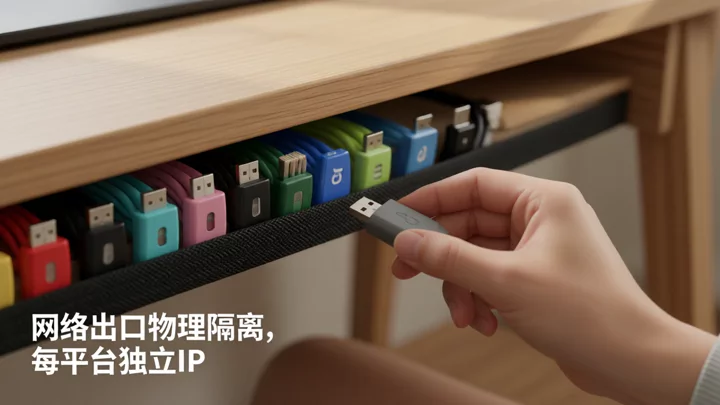
- Network Egress Isolation: Amazon seller accounts and TikTok Shop seller accounts must use different egress IPs. The Shopee Seller Center may share an egress, but physical isolation from Amazon and TikTok Shop is a hard line. Sharing an egress across a batch of devices is the highest-weighted factor in a composite signal.
- Independent Login Credentials and Browser Fingerprints: Use a separate browser profile for each platform's backend. For multi-account TikTok Shop operations, replace shared accounts with Business Center role permissions; for multi-account Shopee operations, each store logs in independently, and no cross-store backend settings changes are made.
- Staggered Operational Timing: The same person switching between three backends to change prices within the same time window is the most easily detected pattern by risk control. Stagger the price-change windows by at least 2 hours, or split the work across different people.
Tool Placement: One Ownership Table Solves Three-Platform Overlap
A 2-8-person team doesn't need a separate toolset for every platform. The minimum setup is: 1 multi-platform aggregate ERP managing inventory and order routing, with each platform's native backend handling pricing and promotions. Ownership principle —
| Sync Line | Sole Write Source | Passive Sync Recipient | Conflict Rules |
|---|---|---|---|
| Inventory | Amazon Seller Central FBA Inventory | TikTok Shop Seller Center and Shopee Seller Center only deduct; no reverse writes | Until FBA in-transit stock is released, TikTok/Shopee freeze the SKU |
| Pricing | TikTok Shop Operations Tool (Promotional Period) / Amazon Seller Tool (Daily Operations) | Shopee seller tools passively follow, latency ≤15 min | Promotional period: TikTok Shop takes priority; daily operations: Amazon takes priority |
| Order routing | Aggregated ERP unified picking list | Each platform's backend handles only platform-side after-sales | Orders from three platforms consolidate into a single order; ERP routes by lowest shipping cost |
If your team runs more than 5 platforms simultaneously—eBay, Walmart, Temu, AliExpress, Lazada, Mercado Libre, and others—your tool tier needs to be upgraded. Determine whether to switch from a single-platform ERP to a multi-platform aggregation tool based on store count × SKU complexity; for a comparison of breakdown placement and batch operation capabilities, seeCross-border e-commerce seller account management: one tool set to manage 10 platforms. Typical tool overlap and breakdown scenarios when three platforms issue orders simultaneously; cross-referenceLogic for selecting store management tools when running three lines simultaneously on TikTok Shop, Shopify, and eBay.
FAQ
Can Amazon seller accounts and TikTok Shop seller accounts share the same receiving entity without triggering account association?
Sharing a receiving entity alone does not directly trigger association, but when combined with a shared exit IP and overlapping operation timing, the compound signal weight increases. Judgment standard: when two platforms' receiving accounts are simultaneously bound to the same legal entity and large deposits arrive in the same time window, it is recommended to stagger deposit times or set up separate sub-accounts. For the five-layer anti-association operational steps, see5 Key Points for Amazon Multi-Account Operations and TikTok Shop Seller Account Management.
In Shopee multi-account operations, how do you avoid write conflicts between your shop management tools and Amazon shop management tools?
Core principle: Shopee seller tools only perform inventory deduction and order status callbacks; pricing write permissions are not exposed. When an aggregated ERP connects to both platforms simultaneously, set the Shopee inventory fields to read-only on the ERP side, and grant write permissions only to the FBA inventory module. The Shopee side will never reverse-overwrite Amazon's inventory judgment.
When updating prices simultaneously across three platforms, how should the order routing layer be configured to avoid the intermediate state of 'allocated but not deducted on the platform side'?
Set a 'deduction-first' rule for order routing in the ERP: after an order is allocated, first send an inventory deduction request to the target platform API; only generate the picking list after receiving confirmation. If no confirmation is received within 10 seconds, roll back the allocation. This step addresses the intermediate state caused by platform-side API latency, not a defect in the tool itself.
If multi-store login sessions drop frequently, is it a platform outage or a local issue?
More than 90% of cases are caused by a three-layer overlap of Cookie TTL expiry, multi-tab cache overflow, and proxy IP drift—not a platform outage. Troubleshoot layer by layer following the three steps of Cookie expiration → cache buildup → proxy switch, and the breakpoint can be identified the same day. For detailed diagnostic criteria and minimal fix actions, seeThree-Step Troubleshooting for Repeated Multi-Store Login Session Drops.

