



The First Judgment After Receiving a Ban Notification: Restriction or Termination
In the first minute after receiving a platform ban notification, spend ten minutes determining whether you received a "restriction" or a "termination." Restrictions (such as an Amazon account performance warning or a temporary TikTok Shop freeze) typically come with a 7-day automatic review window, and lifting the restriction only requires completing identity verification. Terminations (account termination, store delisting) have no automatic recovery mechanism; you must submit materials within the appeal window specified in the notification, and missing the deadline is treated as a waiver. Three things to do in the first hour: take a full-screen screenshot of the notification text and record a screen capture to preserve the timestamp, stop all new product listings and price changes on that account, and log into the backend to confirm the frozen deposit amount and withdrawable balance. These three steps determine the evidentiary foundation for your subsequent appeal and the baseline for financial safety.
Platform Decision Logic: Four-Layer Trigger Signals and the Ban Execution Chain
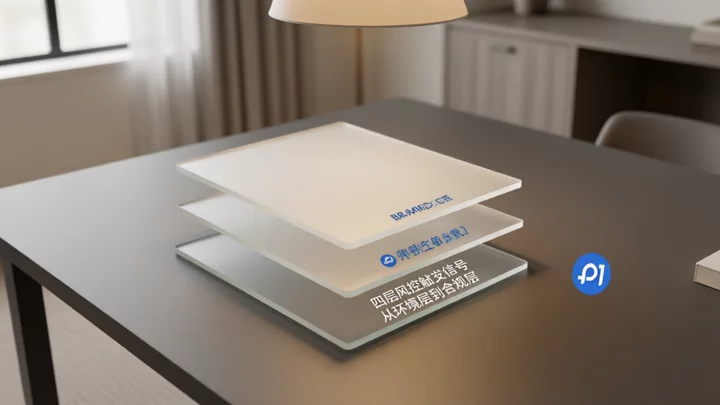
Platform risk control does not actually monitor a vague "violation" label but rather four layers of trigger signals. By cross-referencing the wording of your own notification, you can reverse-engineer which layer was triggered, thereby determining the focus direction of your appeal materials.
- Network Exit and Login Environment Layer:IP hopping, multiple store backends simultaneously active under the same exit IP, browser fingerprint drift. Triggers at this layer typically correspond to "Account Security Anomaly" or "Affiliation Risk" wording. Taking multi-store operations as an example,One account or multiple accounts? Are there restrictions on multi-store operations in cross-border e-commerce? A single article breaks down the entity-level soft constraints and the specific thresholds of the four-tier risk control trigger signals on each platform.
- Behavioral trajectory layer:Batch price changes in a short period, frequent category switching, and high-frequency product listings within 48 hours of new account registration. This corresponds to the "abnormal operation pattern" alert. TikTok Shop typically uses the email subject line "Store temporarily restricted – operation pattern review" when triggered at this layer.
- Transaction and fund anomaly layer:Sudden spike in refund rates, buyer complaints concentrated on a single SKU, and payout routes inconsistent with the registered entity. When triggered at this layer, Amazon's email reads "Your selling account is at risk"; Temu sends "Account termination due to performance policy" directly.
- Compliance and qualification layer:Expired VAT, missing product CE/UL certifications, and upheld intellectual property complaints. Platform messaging typically includes the keywords "compliance" or "qualification." After termination, a secondary appeal is generally not supported; the legal channel must be used instead.
Practical guide to submitting appeals: document checklist, channel selection, and response framework
Prepare appeal materials as a "four-piece set." Missing any one item will result in the reviewer requesting supplementary documents, which prolongs the processing cycle:
- Entity verification:Scanned copy of the business license, front and back of the legal representative's ID card, and a consistency statement between platform registration information and the current entity. If the entity has been changed, attach the business registration change approval document.
- Environment Description:The IP range currently in use, browser versions and device inventory, and the isolation methods from associated stores (dedicated IP, dedicated devices, dedicated fingerprints). If a shared environment existed previously, describe the isolation measures that have been implemented and when they were executed.
- Compliance Documents:Certificates corresponding to the triggered tier (VAT acknowledgment, product test reports, intellectual property response letters). For tiers with no corresponding documents, state "Not Applicable" and provide a reason.
- Rectification Statement:List each corrective action taken along with its completion date, e.g., "removed the implicated SKUs on X/X, switched logistics channels on X/X, updated VAT registration on X/X." Avoid empty assurances such as "We guarantee this will not happen again.".
The submission channel varies by platform: for Amazon, go to Seller Central → Performance → Account Health → Request Review, enter the core appeal in the body within 17 characters, and send attachments to the designated email address; for TikTok Shop, fill out the form directly on the "Violation Records" page in the Seller Center; for Temu, log in to the merchant dashboard and submit via the "Appeal Center" — if no response is received within 48 hours, escalate to the dedicated support email. Use a three-paragraph structure for the response: the first paragraph acknowledges the specific facts and reference numbers stated in the notification, the second identifies the triggered tier and attaches screenshots of environment evidence, and the third lists the completed rectification items. For post-appeal environment remediation, it is recommended to also refer toMulti-Store Logins Keep Triggering Linked Store Bans — How to Build an Account Isolation Scheme for Cross-Border E-Commerce Stores.
Fund Safety During the Freeze Period and Handling of Outstanding Orders in Appeal Materials
An account freeze does not automatically extend the logistics claim deadline, but the path to recover funds will be affected. After a ban, two tasks must be prioritized: First, immediately lock in the claim deadline for in-transit packages through the logistics provider's own ticketing system (most carriers allow 60–90 days after shipment) to prevent the deadline from expiring and the payout becoming void; Second, compile a "Pending Settlement Logistics Outstanding Orders List" (including tracking numbers, shipment dates, estimated payout amounts, and corresponding logistics channels) and submit it as an attachment to the "Rectification Statement" in the appeal materials. When requesting restoration of the settlement channel, simultaneously request priority release of this outstanding payout to prevent the funds from being delayed by 15–20 days. If the account ultimately enters a liquidation or termination state, the release of outstanding payouts will depend on the deposit unfreeze cycle. For specific crediting timelines, seeAfter platform liquidation or store closure, how is the cross-border e-commerce deposit refunded and how long does it take to arrive?.
Frequently Asked Questions
How long after submitting an appeal will a response be received?
Amazon typically takes 7–14 business days, TikTok Shop 5–7 business days, and Temu 48–72 hours. If no response is received within the timeframe, resubmit through an alternative channel (email/customer support), but retain the screenshot of the initial submission as time evidence to avoid being flagged as a duplicate appeal.
Can shipments continue during the restriction period?
No. During the restriction or termination period, all new orders are automatically cancelled or suspended, and FBA inventory is locked in the warehouse. Packages already shipped but not yet signed for will continue to be tracked by the logistics carrier, but triggering a claim requires the account to have its settlement channel restored first.
Will another store under the same entity be affected?
Platform association determinations are based on environmental and behavioral data rather than the registered entity. If the other store uses an independent IP, an independent device, and has no shared operator, it is typically not affected; however, immediately cross-check the login logs of both stores to rule out any residual traces of the same IP range or the same browser fingerprint.
Can a lost package claim and an account ban appeal be submitted simultaneously?
Yes, and they should run in parallel. The logistics provider's ticket system and the platform appeal process are two independent systems that do not block each other. The only crossover point is that when the platform's settlement channel is frozen, the payout crediting time is extended. The appeal materials should specify the outstanding balance amount and the estimated credit time, in order to request priority restoration of settlement.