


Open Excel, type 50000 into the first cell, then deduct line by line by platform: deposit, monthly rent, initial inventory value, ad-testing cost… By the third row, one platform alone eats close to a thousand in fixed monthly expenses. Stack on the traffic budget for a 60-day cold-start period, and your cash flow drops below thirty thousand to cover both inventory and logistics. The problem is rarely that one platform "doesn't make sense"—it's that you undercounted the fourth account: the return-and-trial-error buffer. The four-account breakdown framework below helps you split fifty thousand into four non-overlapping funding pools so each platform can calculate its own "minimum survival line."
First Account: Platform Entry Thresholds (Fixed Costs)
From registration to your first orders, rigid costs that must be paid upfront include the deposit, platform monthly fee (or tech fee), and tool subscriptions needed to keep basic operations running. Ranges for four common platform tiers are listed below:
| Platform | Deposit | Monthly Fee / Tech Fee | Tool Subscriptions (ERP / Product Research) | First Month Fixed Costs |
|---|---|---|---|---|
| Shopee | 0–2000 RMB (depending on category) | 0 | 0–500 RMB/month | 0–2500 RMB |
| TikTok Shop | 0 | 0 | 0–500 RMB/month | 0–500 RMB |
| Amazon (Individual Seller) | 0 | Approx. 290 CNY/month | 500–1,000 CNY/month | 800–1,300 CNY/month |
| Shopify standalone store | 0 | Approx. 210–2,150 CNY/month (plan-dependent) | 500–1,500 CNY/month | 700–3,700 CNY/month |
On Shopee and TikTok Shop, the security deposit in certain high-return-rate categories (3C, apparel) can rise to 1,000–2,000 CNY, with a freeze period of approximately 90 days. During the cold-start phase, this amount is essentially "dead money." Amazon's individual seller monthly fee is low, but once SKUs exceed 40, the account switches to the Professional tier and the commission structure changes. Shopify's monthly fee may seem optional, but once you factor in the domain, payment gateway, and essential plugins, the first-year total typically does not go below 6,000 CNY. If you later scale to operating on two or more platforms simultaneously, account isolation and device fingerprint management directly impact fund security. See theMulti-Account Management Practical Guide.
Second account: first-batch fulfillment and inventory costs
The no-inventory model in 2024 is not beyond reach, but logistics lead times and return rates have already squeezed gross margins into the 8%–12% range. With a fifty-thousand budget, the key question is not “can I do it” but “how many SKUs can I run.” At a per-unit fulfillment cost of 30–60 yuan (domestic consolidation) or 40–80 yuan (overseas warehouse), the inventory pool works out to roughly twenty thousand to twenty-five thousand, capping controllable SKUs at no more than 15. Once you exceed 15 SKUs, if even 3 become slow-moving, the cash conversion cycle stretches from 45 days to over 90 days, and the cold start breaks down.
Logistics route choice directly affects per-unit cost: domestic consolidation suits lightweight, small items (<500g); overseas warehouses reduce per-unit outbound shipping by 3–8 yuan once monthly shipments exceed 500 units, but once the return rate surpasses 12%, reverse-handling fees eat into that savings. See the decision matrix atOverseas warehouse vs. domestic consolidation: logistics cost comparison. If you go with Amazon, the structural differences between fully managed and semi-managed models in pricing authority and return reserve funds will significantly alter the margin on this account. SeeAmazon managed-model profit structure breakdown.
Third account: cold-start traffic budget
The first 60 days are the only window to use paid traffic to validate product assumptions with data. Allocate by platform: TikTok Shop short-video testing phase approximately 3000–5000 yuan (shooting 30–50 creatives plus paid amplification); Shopee off-platform traffic (influencer collabs, search ads) approximately 2000–4000 yuan; Shopify standalone site Google/Meta combined spend approximately 5000–8000 yuan. Use the figures for the platform you actually choose, but one hard rule applies: the traffic budget and the inventory budget must be managed in separate pools. The moment slow-moving stock ties up cash, you lose the ammunition for a second round of paid traffic; the cold-start cycle stretches past 90 days and fixed costs keep bleeding.
If you are running Shopee and TikTok Shop simultaneously, their traffic logic and payback cycles differ significantly; whether, under a fifty-thousand budget, you should concentrate all traffic spend on a single platform—refer toA Real Comparison of Shopee vs. TikTok Shop for Small Sellers.
The Fourth Account: Returns and Trial-and-Error Buffer
Working backward from category-specific return rates of 8%~18% (higher for apparel, lower for 3C), a fifty thousand yuan budget requires reserving 5000~8000 yuan as a buffer for reverse logistics, relisting, platform fines, and handling negative reviews. This amount appears to generate no revenue, yet a single concentrated logistics loss event or a platform compliance audit deduction (funds are escalated to frozen status if no response is made within 48 hours) is enough to simultaneously break the cash flow of the first three accounts. Buffer funds must be held exclusively as demand deposits and must not be allocated to any platform top-ups or merchandise subsidies.
If the account is banned or restricted, buffer funds that have not been deposited into the platform remain available at any time; payments frozen in the platform account must go through the appeal channel, with a typical response cycle of 2~6 weeks. For the specific document checklist and submission milestones, seeCross-Border E-Commerce Account Ban Appeal Process.
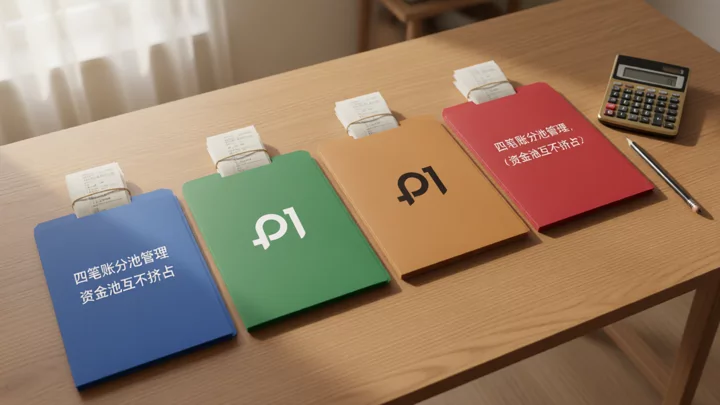
- Entry Threshold (Fixed Expenses) 15%~20%
- Fulfillment & Inventory 40%~45%
- Cold-Start Traffic 20%~25%
- Return & Trial-and-Error Buffer 10%~15%

Frequently Asked Questions
Is a 5-wan budget enough to launch on both Shopee and TikTok Shop at the same time?
On rigid costs, yes — the combined deposit for both platforms stays under 4000 yuan with zero monthly rental. However, the traffic budget gets split in half, stretching each platform's cold-start period from 60 days to 90 days, and the inventory pool shrinks from twenty-five thousand to twelve thousand. A solo operator is advised to first run through a single-platform break-even model with 4 wan, keeping the remaining 1 wan as test funds for the second platform.
How much does profit differ between Shopee and TikTok Shop under a no-inventory (dropshipping) model?
Shopee has a low average order value (15–40 yuan) and high logistics costs as a share of revenue, pushing no-inventory gross margins down to 7%–10%. TikTok Shop leverages content-driven premium, lifting the average order value to 40–80 yuan with gross margins of 10%–15%, but content production costs will erode 3–5 percentage points. The actual net gap narrows to 2–4 percentage points. The key variable is the return rate — Shopee's apparel category commonly hits 18%, directly consuming half the gross margin.
How do slow delivery times drive up return rates, and how should a 5-wan budget handle this?
For orders that exceed the promised delivery window by more than 15 days, the ratio of buyer-initiated cancellations and platform automatic refunds rises by 5–8 percentage points. With a fifty-thousand budget, there is no need to chase express shipping — write the promised delivery window wider (choose "7-15 days" instead of "3-5 days") and redirect the savings from the logistics premium into the traffic pool for secondary conversion. Every extra 5 yuan spent on per-item shipping means one fewer SKU that the inventory pool can hold.
After an account ban, can the reserved buffer funds be recovered?
Buffer funds held in your own bank account have no link to the platform and remain accessible at any time. Goods payments frozen within a platform account must go through the appeal channel — Shopee and TikTok Shop typically respond within 5–10 business days, while Amazon's post-ban fund freeze period can reach 90 days. The key principle: buffer funds retain liquidity only when they have "not been topped up into the platform."